



The American West is known for its large swaths of land preserved for public use and enjoyment, and is home to some of the most sought-after western ranches for sale. The first National Forest was created in 1891, and government activity to preserve these lands continued throughout the early 1900s. Goals of this formation were preserving public use while also maintaining the health and productivity of the land. This included timber production, wildlife habitat preservation, watershed protection, among other important focal points. At the same time, the United States government was incentivizing Americans to move out west through the Homestead Acts. There were conflicts amongst the two initiatives, leading to the 1906 Forest Homestead Act, allowing for specific parcels with agricultural value to be homesteaded within the Forest Service Boundary. Over time, those parcels became increasingly scarce. Today, these remaining landscapes are increasingly reflected in the limited supply of western ranches for sale across the United States. They also represent a unique opportunity to own property that feels both private and connected to something much larger than its boundaries.
There is a quiet paradox to wild places. The same qualities that make them less convenient are what have protected them over time. While much of the West has continued to grow and modernize, these landscapes have remained largely intact. They are shaped not by rapid development or heavy use, but by water, wildlife, and the steady rhythm of the seasons. These special properties offer a kind of presence that is difficult to replicate. A sense of space, quiet, and continuity that stands in contrast to the pace of modern life.
Why Off the Beaten Path Matters
Remoteness plays a meaningful role in preserving both the character of the land and the experience it provides. Properties that require effort to access tend to see less traffic over time. There are fewer people moving through them, fewer disruptions to wildlife, and less strain on natural resources. That absence of pressure allows the land to function more naturally and more consistently. Many of today’s most desirable western ranches for sale share this same defining trait of remoteness and ecological integrity.
In regions like the Bridger-Teton National Forest, this is especially important. Large, connected landscapes allow wildlife to move freely between seasonal habitats, and migration corridors remain intact, supporting species that rely on long-distance travel to survive. These patterns have existed for generations, and in areas where the land remains undisturbed, they continue much as they always have.
A clear example of this can be seen in western Wyoming, where one of the longest pronghorn migrations in North America moves between wintering grounds in Sublette County and summer ranges in Grand Teton National Park. Each year, pronghorn travel hundreds of miles along this corridor, passing directly through landscapes like Bull Creek Ranch in the Gros Ventre drainage.
Valley floor properties, particularly those with reliable water sources, naturally become focal points within these ecosystems. At Bull Creek Ranch, moose are year-round residents, while elk and mule deer move through in predictable seasonal patterns. Predators follow these same systems, and birdlife thrives in the presence of healthy water and habitat. The experience is not occasional; it is consistent and embedded in the land itself.
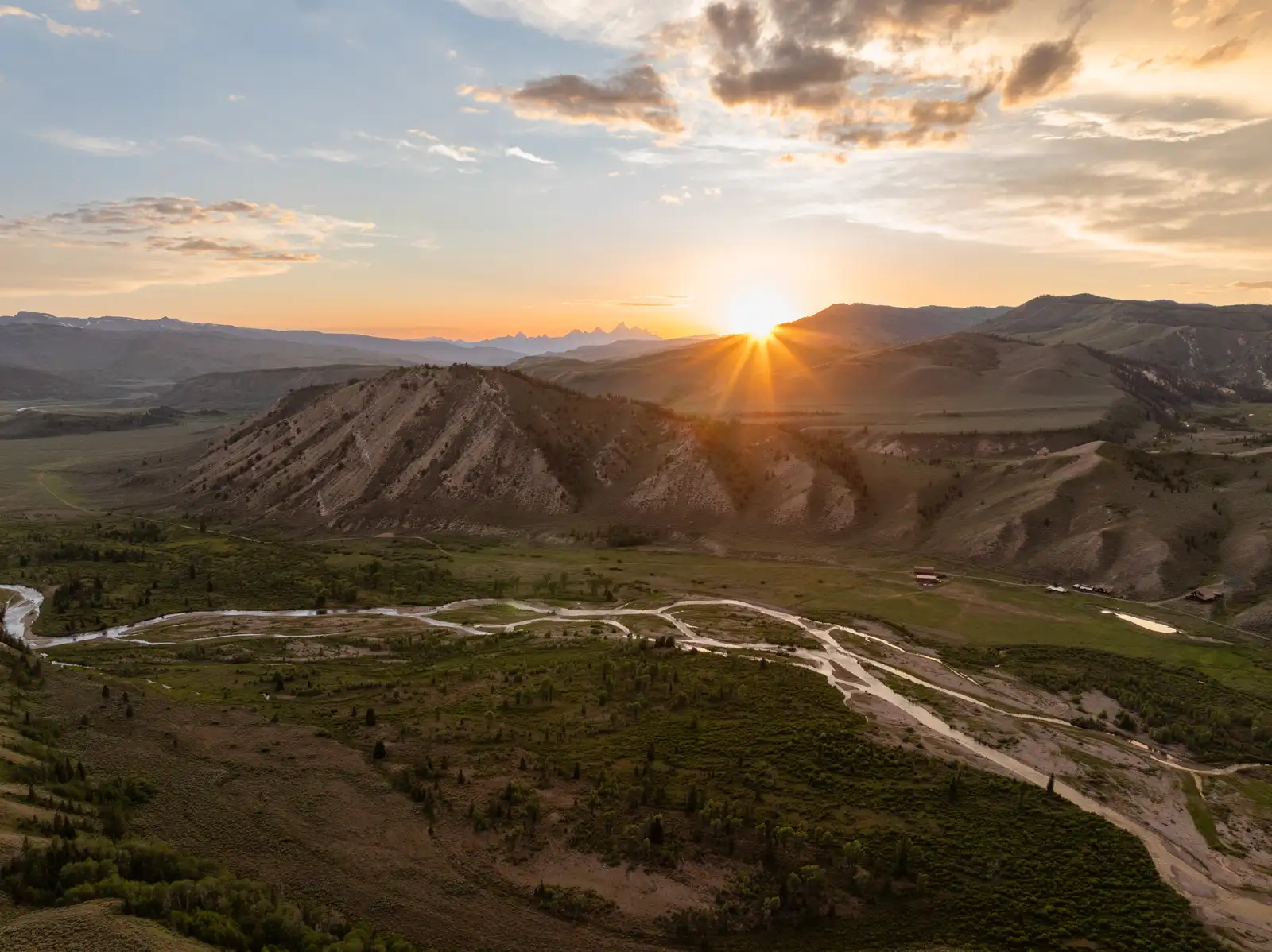
For a landowner, this creates an experience that feels both dynamic and dependable. Wildlife is not something you hope to see but rather something you expect to see.
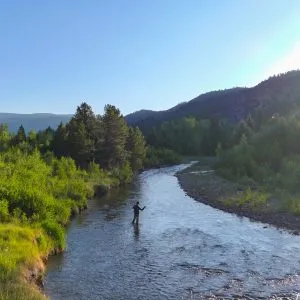
The same principle applies to fisheries. Remote creeks and rivers tend to remain colder, cleaner, and less pressured. Spawning cycles are left untouched, and fish populations are able to sustain themselves in a more natural way. The result is not only better fishing, but a more authentic connection to the resource.
This dynamic is clearly demonstrated at Crystal Ranch in Utah, where the Yellowstone River and Summer Creek flow through a largely undisturbed valley surrounded by national forest. Together, they provide over three miles of private fishing water supporting brown, rainbow, brook, and cutthroat trout. The combination of a freestone river and a spring creek system creates both diversity and consistency, allowing for a long fishing season and a fishery that remains resilient even during periods of drought. This is also why many of the most desirable western ranches for sale share these same characteristics of clean water, limited pressure, and intact habitat systems.
In this sense, being off the beaten path is not a limitation, but rather a form of protection that preserves the land, wildlife, and the overall quality of the experience.
The Tradeoffs of Wild Land Ownership
Owning land in these settings comes with a different set of considerations and understanding them is an important part of the process.
Access is often the first factor to evaluate. Roads may transition from pavement to gravel, and in some cases may be seasonal depending on elevation and weather conditions. Travel times to nearby communities can be longer, and winter access may require planning and the right equipment.
Infrastructure is another key element. Traditional utilities are not always available in remote locations, and developing a property may involve building independent systems for power, water, and communications. This requires a thoughtful approach, both in terms of design and long term reliability.
There can also be regulatory considerations. Properties located within or adjacent to national forest boundaries may involve coordination with agencies for permitting, access routes, or future improvements. These processes are manageable, but they require patience and an understanding of how to work within those systems.
At the same time, modern advancements have significantly changed what is possible in remote environments. Solar energy systems have become more efficient and reliable; battery storage allows for consistent power, and water systems can be designed to operate year-round. Satellite based connectivity, including services like Starlink, has made it possible to stay connected even in locations that feel far removed from everything else. As a result, the gap between remote living and modern comfort has narrowed considerably.
For many buyers, these tradeoffs are not viewed as drawbacks. They are part of what ensures that the land remains preserved. The same factors that require a bit more effort are the ones that prevent overdevelopment and maintain the integrity of the landscape.
What Experienced Landowners Understand
Buyers who are drawn to these types of properties tend to approach ownership with a different perspective. They are not simply looking for land, they are looking for a place that holds its character over time. A place defined by space, privacy, and a sense of continuity that extends beyond short term trends or market cycles.
There is also an understanding that landscapes like these are finite. This scarcity is especially evident in premium western ranches for sale that border national forest or wildlife corridors. Large, intact tracts of land connected to vast public systems are becoming extinct. As surrounding areas continue to develop, opportunities to acquire properties in wild place become more limited. Because of these scarce opportunities, ownership often carries a sense of stewardship. Maintaining healthy habitat, protecting water resources, and preserving the overall character of the land are not secondary considerations; they are part of the value itself. This mindset influences how the land is used. Improvements are made thoughtfully, and development is approached with consideration. The goal is not to change the property, but to maintain what makes it exceptional.
There is also a strong appreciation for what these places are missing. The absence of congestion, the lack of public pressure on valuable natural resources, and a soundscape defined more by the seasons than by human activity. For experienced landowners, that simplicity is not something lacking, it is something worth preserving.
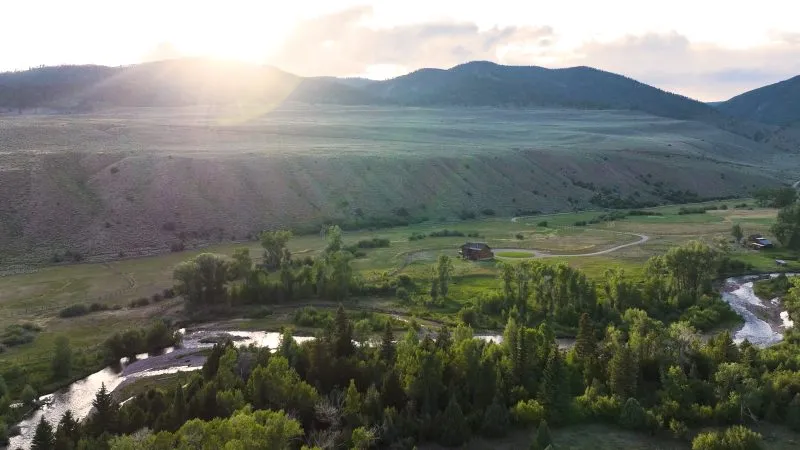
This is particularly evident on properties like Crystal Ranch in Utah, where nearly 470 acres sit surrounded by the Ashley National Forest. The scale of the surrounding landscape, combined with over three miles of private fishing on the Yellowstone River and Summer Creek, creates an environment where ownership extends beyond the deed. The experience is shaped as much by what lies beyond the boundary as what lies within it.
When the Effort Becomes the Reward
There is a distinct transition that occurs when traveling to a property like this. As the road narrows and the surroundings begin to open up, there is a noticeable shift in pace. The distractions of everyday life begin to fade, replaced by a sense of quiet and space. By the time you arrive, the effort it takes to get there no longer feels significant. It feels like part of the experience.
What follows is often difficult to describe but immediately understood. It may be the stillness of an early morning, where the only sound is water moving through a creek. It may be watching elk, deer, moose, or predators move naturally across the landscape, without urgency or interruption. Or it may simply be the feeling of being somewhere that has remained unchanged for generations.
Many of these wild places are surrounded by public land with limited access, creating a sense of scale that extends well beyond the property itself. The boundaries begin to feel less defined, and the experience becomes more expansive.
Modern comforts may be present, but they exist quietly in the background. They support the experience without shaping it. In these moments, it becomes clear that the effort required to reach the property is not separate from its value, but part of what creates it.
Wild Places on the Market
The characteristics that define these properties can be seen across select ranches in the West. Examples of today’s most compelling western ranches for sale can be found in properties like Bull Creek Ranch in Wyoming and Crystal Ranch in Utah. Nestled deep within Wyoming’s Gros Ventre Mountain Range, Bull Creek Ranch sits within one of the most active wildlife corridors in the region. Pronghorn move through these landscapes each year as part of a documented migration stretching from the Red Desert to Grand Teton National Park, while moose remain on the property year-round. Elk, mule deer, and predators pass through seasonally, following patterns that have remained unchanged for generations.
The setting is often compared to the famed Lamar Valley of Yellowstone National Park. Not for its proximity, but for its density and diversity of wildlife, and the feeling of being immersed in a fully functioning ecosystem.
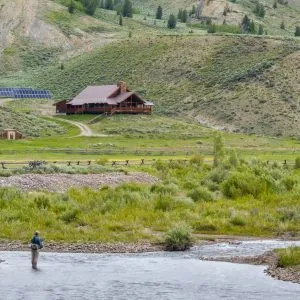
Water plays a central role in these environments. Clean, cold creeks provide the conditions necessary to support native trout populations, allowing for natural spawning and long-term sustainability. Fish Creek, which flows through Bull Creek Ranch, is a defining feature of the property, offering private frontage and direct connection to a larger watershed system. Each year, native cutthroat trout move upstream in search of its clear, cold water, reinforcing the ecological importance of these intact riparian corridors.
In Utah, properties such as Crystal Ranch reflect a similar dynamic, though expressed through a different landscape. Located beneath the Uinta Mountains and nearly surrounded by national forest, Crystal Ranch offers over three miles of private fishing on the Yellowstone River and Summer Creek. These waters support four species of trout and provide a long, diverse fishing season rarely found in a single property.
Equally notable is the balance between seclusion and accessibility. While the ranch feels remote and protected, it remains within reach of communities like Heber City and Park City, offering a combination of privacy, scale, and usability.
Together, these properties illustrate a broader truth. The most compelling ranches are not defined by a single attribute, but by how all elements of the landscape work together. Water, wildlife, topography, and location combine to create something that is both functional and enduring.
The Value of Places That Remain Wild
As the American West continues to evolve, truly wild landscapes are becoming more difficult to find. Development expands, access improves, and areas that were once considered remote become increasingly connected. In that context, properties that remain off the beaten path stand apart. Their value is not defined by convenience or proximity, but by preservation and the ability to experience land that still functions as it always has, shaped by natural systems rather than external pressures. They require more intention, and at times more effort. But that is exactly what protects them. Properties like Bull Creek Ranch and Crystal Ranch demonstrate that these opportunities still exist, but they are increasingly limited, and often overlooked by those prioritizing convenience over character. This is what continues to drive demand for western ranches for sale across the American West. For those who understand what these places offer, the value is clear. Not just in ownership, but in the experience itself. Because in the end, the landscapes that remain just out of reach are often the ones that endure, and the ones that matter most.
Explore Western Ranches for Sale
The most compelling western landscapes are not defined by convenience—they are defined by character, water, wildlife, and time. These are places where land functions as it always has, shaped by natural systems rather than pressure or development.
If you are considering the purchase or sale of western ranches for sale, our team specializes in representing legacy properties across the American West with a focus on stewardship, privacy, and long-term value. We work with buyers and sellers who understand that these properties are not just real estate—they are enduring assets tied to land, water, and generational opportunity.
Connect with Live Water Properties to explore available listings or discuss the unique qualities of your property.
