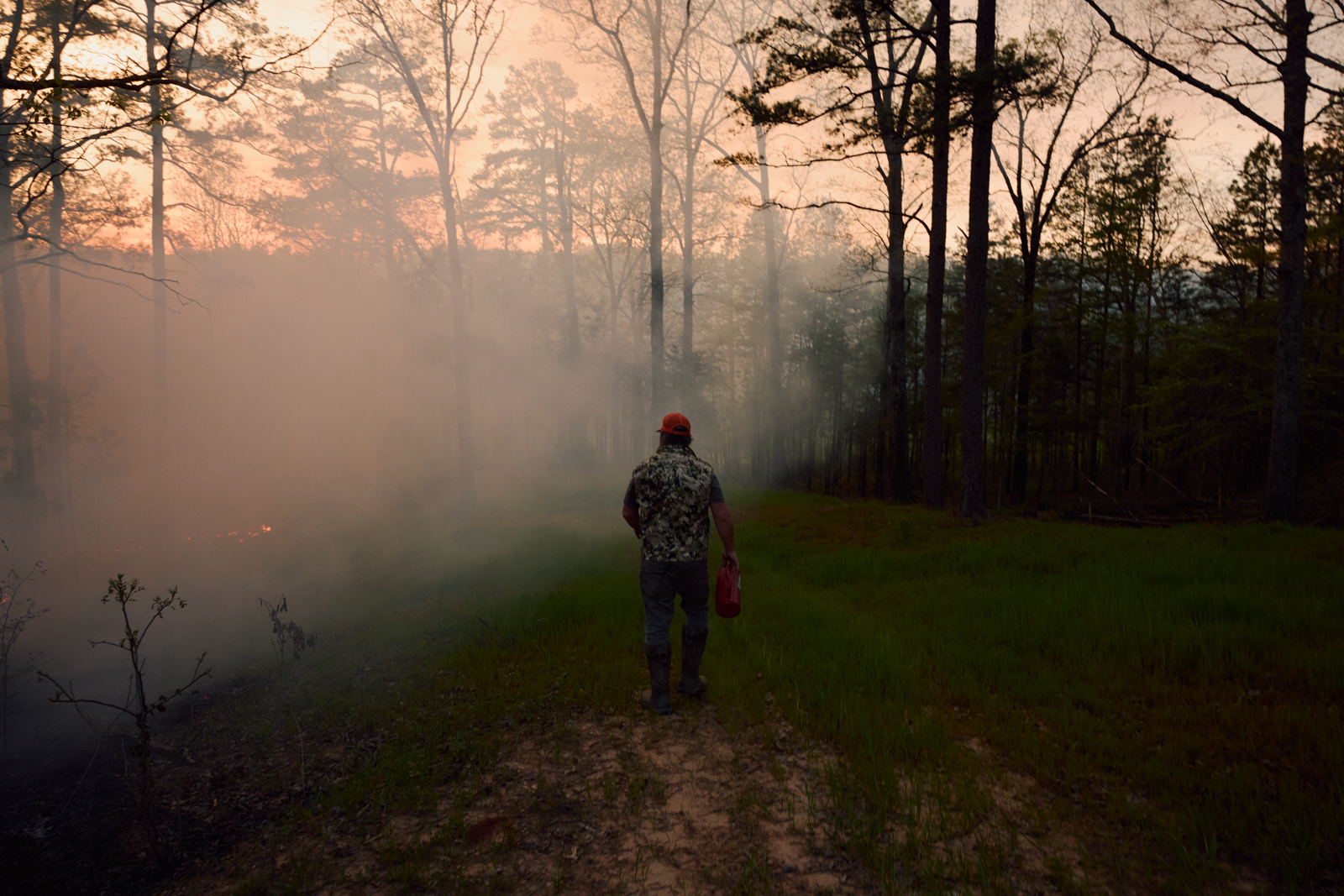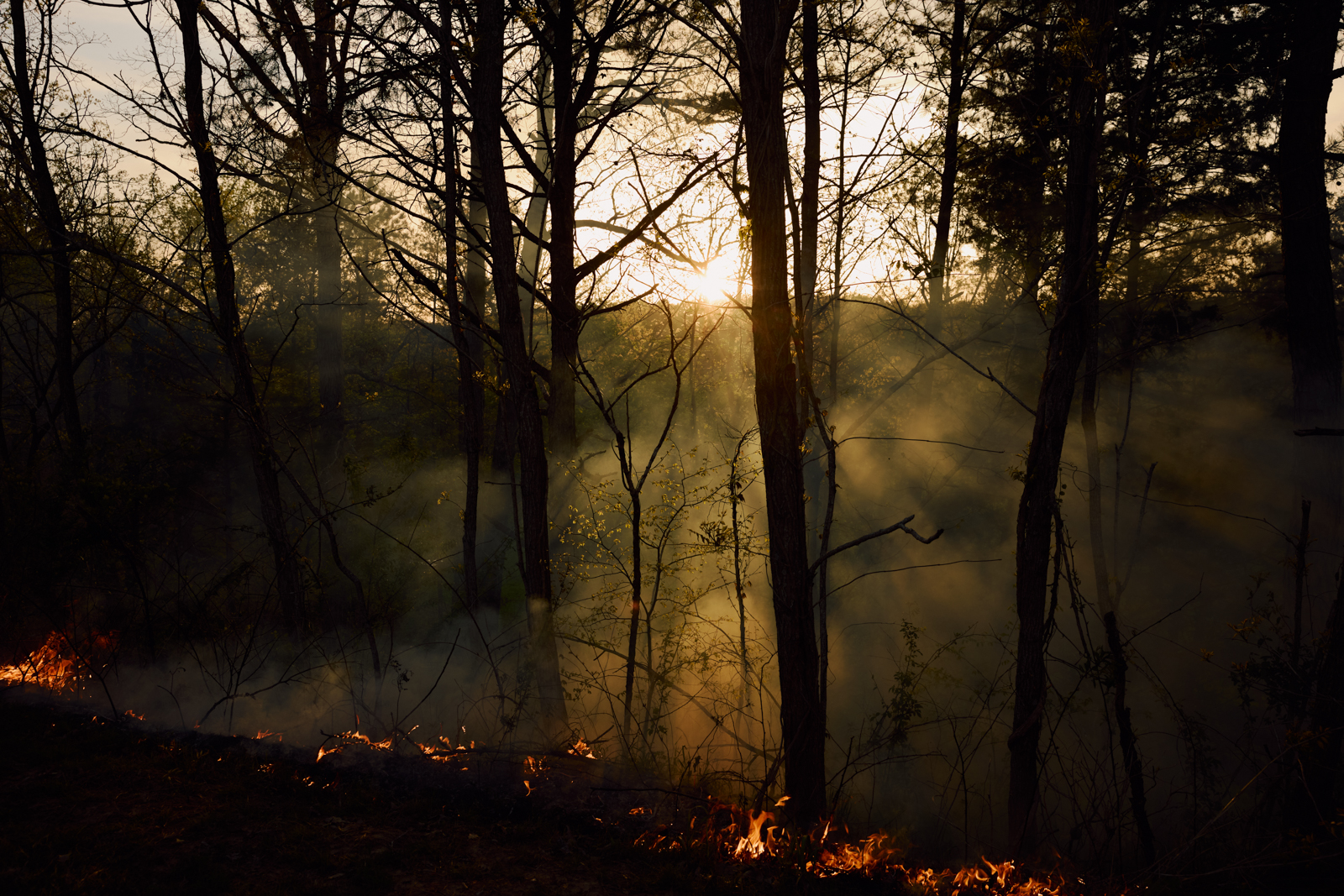



In pine savannahs throughout the Southeast, “settin’ the woods on fire” is more than a classic Hank Williams tune, it is time-tested controlled burning for land management.
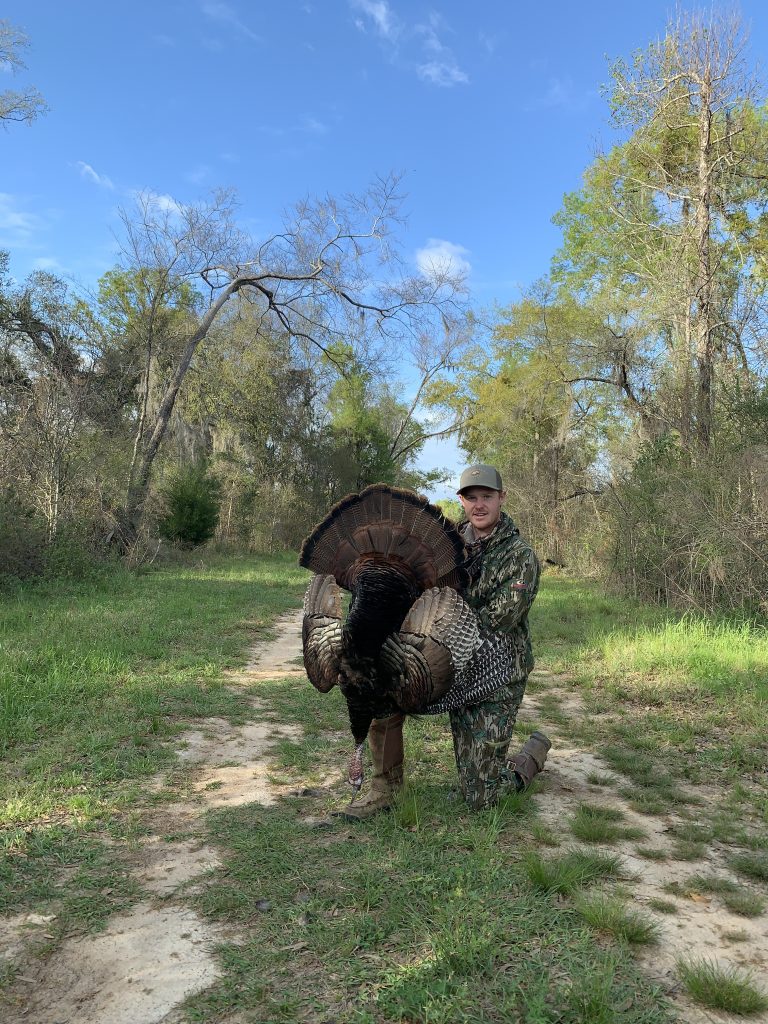
“Landowners throughout the Southeast use prescribed burning to keep their landscapes ecologically productive,” said fifth-generation Georgian Davis Willis, who is a Broker for Live Water Properties based in his hometown of Albany, Georgia. “Not only is prescribed burning the most cost-effective technique available, but conscientiously applied fire opens the forest understory, sets back plant succession, helps eradicate invasive species, removes fuel loads helping prevent wildfires and increases plant diversity which improves wildlife habitat and water quality.”
Most North American ecosystems, including pine savannahs, evolved with fire. In fact, Native Americans harnessed the power of fire for agriculture and to help direct the movement of game. European settlers had a very different relationship with fire because the ecosystems they were accustomed to did not benefit from periodic burns; therefore, they maintained a fire suppression mindset.
Over time, removing fire from the landscape changed the ecosystem’s composition. Small woody species began to encroach on once open rangelands and forests, consequently changing the wildlife habitat. A classic southeastern example, among other factors, is the decline of bobwhite quail. The beloved game birds need grasslands, not woody brush species, beneath the tree canopy to thrive.
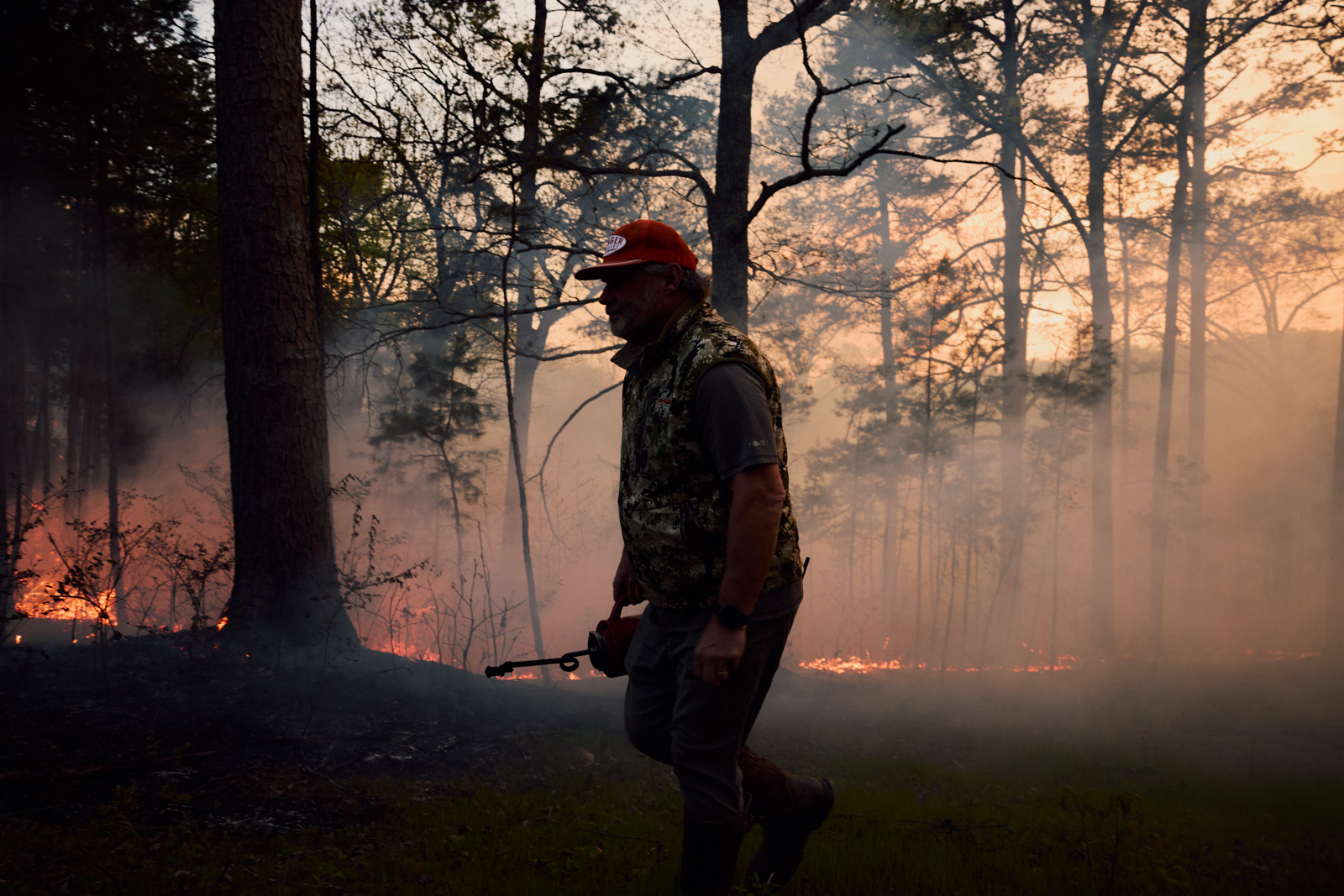
“On well-maintained pine plantations that are successfully managed for quail, the understory is open and beautiful,” Willis said. “You can see for miles.”
In areas of the Southeast, if plant succession isn’t disrupted, a phenomenon known as mesophication can occur. Previously open forests become closed and filled with shade-loving trees. Because no sunlight reaches the ground, it further destroys the plant community on the forest floor. Humidity increases, rendering the forest uninhabitable for most wildlife species.
“At that point, there is no fuel on the ground making it difficult to burn,” Willis said. “The only thing you can do to reclaim the land is to clear cut or drastically thin the trees and start over.”
Prescribed burning is the controlled application of fire by a team of experts under specified weather conditions that helps restore health to ecosystems that depend on fire. In the Southeast, the most common land management goal is managing and maintaining the understory in pine savannahs.
According to Willis, Southeastern land managers rely on cool season burns conducted in late winter to early spring prior to plant “green up” to achieve their goals. Depending on the size of the property, land managers generally burn between one-quarter of the acreage for smaller properties to one-half for larger properties in an on-going rotation, usually every two to three years. In drier climates such as those in Texas and out West, the rotation between burns is longer, because plants require rain to recover.
“In dry climates, they try to burn after it rains,” Willis said. “Over here, we try to burn before it rains.”
In addition to season, the burn prescription takes in a wide variety of factors including humidity, wind direction and wind speed. Because the Southeast is more humid, smoke does not rise as rapidly or as high as in a drier climate. As a result, smoke behavior and air quality are important concerns in the Southeast.
“If you, as a land manager, set a fire on a day that prevailing wind is going to carry the smoke cloud across a nearby highway or interstate, you’re liable for any accidents that result from that smoke,” Willis said. “Nearby towns and cities are vigilant about air quality. You can’t set a fire unless the conditions are exactly right.”
Controlled burning for land management is equal parts art and science, so it is not as simple as purchasing a drip torch and setting fire to the land. It takes planning and expertise to ensure that the burn is effective and safe. The first step is establishing the goals for the burn and identifying the portion of the property to be treated. The goals will dictate the burn’s prescription, including temperature, humidity level, wind speed, and all the other considerations.
Once the site is identified, fire breaks will have to be installed or identified if there are natural breaks such as creeks or rivers. Fire breaks help keep the prescribed fire contained and prevent it from escaping and becoming a wildfire. Safety protocols, ranging from gathering the appropriate equipment to enlisting an experienced burn team to notifying neighbors, local law enforcement, and county officials, have to be put in place. The weather and the fuel load must be monitored until the minute the fire is ignited.
“If the conditions aren’t exactly right, the burn will have to be postponed until they are,” Willis said. “It’s hard to say, ‘No go today,’ but it’s essential that the burn boss be willing to send everyone home. Discretion is always the better part of valor.”
Prescribed burning is readily available to all landowners, even those who don’t have first-hand experience themselves. In Georgia, landowners can contact the Georgia Forestry Commission and enlist a team of the agency’s professionals for a burn. Private contractors are another option for conducting a prescribed burn. Landowners can also get education and certification from several different non-profit organizations, including Tall Timbers Research Station and Land Conservancy based in Tallahassee, Florida.
Willis, who has been part of his family’s land management efforts on agricultural and recreational properties throughout the Southeast for his entire life, has seen the transformative power of well-applied controlled burning for land management.
“When it comes to prescribed fire, my best advice to Southeastern landowners is, ‘Don’t hesitate. Just do it,’” Willis said. “A prescribed burn that is well-timed and well-executed ignites a spark of land restoration and rejuvenation unlike anything else.”
Photos courtesy of Hunter Gawne – https://www.huntergawne.com/