


Stay Up To Date Join Our Newsletter

This field is for validation purposes and should be left unchanged.

In the internet era, people often dismiss the importance of a Buyerโ€™s agent in a ranch real estate transaction. โ€œWhile the internet has changed information access and marketing in our industry, ranch real estate is still very much a relationship business,โ€ says Ryland Moore, Live Water Properties sales associate based in Hood River, Oregon. โ€œPeople working with people get the deal done when things go awry.โ€

Ryland Moore, Oregon Ranch Broker

Itโ€™s no secret that a real estate transaction has two sides: a Seller and a Buyer. Although there are exceptions, generally, each side is represented by an agent. Each agent has different responsibilities. The Sellerโ€™s agent is responsible for completing a listing agreement, gathering all materials necessary for due diligence, marketing, conducting showings, and educating potential Buyers and their agents about the property. Good and properly educated listing agents generally know more about the property than anyone other than the owners.

On the other hand, the Buyerโ€™s agent helps Buyers locate and evaluate appropriate properties, reviews due diligence confirming the materials provided, understands current property values for accurate valuation, requests additional information as necessary, and conducts boots-on-the-ground due diligence to ensure the property meets a clientโ€™s needs.

While there is a varied to-do list on each side of the transaction, the difference between the Sellerโ€™s and Buyerโ€™s agent is fundamental.

โ€œEssentially, it boils down to who the agent is responding to and whose interest he or she is responsible for in the transaction,โ€ says Moore, who opened Live Water Propertiesโ€™ Oregon office in 2009. โ€œThe Sellerโ€™s agent has a fiduciary responsibility to the Seller and no one else, while the Buyerโ€™s agent has the same fiduciary responsibility to the Buyer.โ€

Benefits of Using a Buyerโ€™s Agent

Moore, a native of Virginia’s Blue Ridge Mountains, grew up outdoors and began exploring western states as a teen. After graduating from the University of the South (Sewanee), he headed to Jackson Hole, Wyoming, to work with a local land trust and the U.S. Forest Service in fisheries.
He stayed to indulge his passion for climbing, fly fishing, skiing, and hunting. When his parents began to question the โ€œROIโ€ on his college education, Moore determined it was time for graduate school. He found a perfect academic fitโ€”and lifestyleโ€”fit in Oregon. He arrived in 1999, and he has been there since.

โ€œI fell in love with the stateโ€”and its diversity,โ€ says Moore, who worked in conservation with several land trusts and private equity around water and energy development before joining Live Water Properties. He is a shareholder of an independent registered investment advisory firm based in Portland.

Match-making

His admiration of his new home state, combined with his passion for all things outdoors, gave him a natural advantage in ranch real estate. His expertise as a Buyerโ€™s agent is grounded in โ€œlocation, location, location.โ€

From first-hand experience, Moore can speak to the differences in the Oregon coast and its timbered, rocky slopes to the rich Willamette Valley in the central part of the state to the sprawling ranches in eastern Oregon marked by irrigated farmland, Ponderosa pine forests and high desert. As a result, he is an accomplished matchmaker, pairing Buyers with their dream properties.

โ€œFrom my perspective, a good Buyerโ€™s agent, at least in the beginning, does more listening than talkingโ€” except for asking questions,โ€ Moore says. โ€œJob one is figuring out exactly what the client wants to do and where they want or need to be, to do it successfully.โ€

Getting to that point requires an ongoing, far-ranging, and often detailed conversation. A good Buyerโ€™s agent will sort through a myriad of seemingly unrelated details to ascertain a clientโ€™s โ€œmust haves, nice to haves, and not necessaries.โ€ It can include everything from how far a client is willing to drive from an airport (or to the grocery store), or whether they need a private landing strip on the property, to whether they are willing to traverse gravel roads or prefer paved roads to whether they want private access to river frontage or senior water rights for irrigation.

Are they in the market for a โ€œfixer upperโ€ or do they want a turnkey property? Are they looking for a small getaway, an expansive hunting ranch with big game, a live water fishing property, a productive agriculture operation, or a multi-faceted property that can offer many things?

โ€œIf I can rank their priorities, the more likely I am to find a property that is a perfect fit for them,โ€ Moore says.

Sometimes, clients come in with a specific location in mind, but after Moore hears what they hope to achieve, he may suggest alternative locations that might fit their needs better.

โ€œBased on what I know about the various regions of the state, I can say, โ€˜That sounds good, but have you considered looking near X,โ€™โ€ Moore says. โ€œI want to make sure that my clients donโ€™t limit their options and opportunities by focusing on a single location if others also fit their needs.โ€

Networking and Off-Market Deals

Over the past 15 years of working in Oregonโ€™s farm and ranch market, Mooreโ€™s network has grown alongside his knowledge of the state. Being plugged in with landowners, land professionals, and guides and outfitters of all types provides him with an inside track on off-market deals.

โ€œOff-market deals are often a win-win situation where buyers obtain a perfect-fit property that isnโ€™t publicly listed. Sometimes, the start of a deal is knowing that a long-time agriculture producer is considering retiring, or a recreational landowner is thinking about selling,โ€ Moore says.

Since 2017, off-market deals have been a large percentage of Mooreโ€™s transactions. He recalls one deal where a potential Buyer walked into the office asking to see one of his listings. As part of the conversation, the Buyer mentioned he had already looked at 20 ranches and rejected them all.
After spending some time, asking a lot of questions, and hearing what the Buyer described as his ideal ranch, Moore said, โ€œYouโ€™re not looking at the right properties for what you say you want.โ€

Knowing what the Buyer had in mind, Moore made one phone call. Although the landowner hadnโ€™t listed the property, he was willing to let Moore show the property. As Moore anticipated, it was a perfect fit and the landowner agreed to sell.

The Buyer, though, wanted a larger property. Moore got back on the phone. Eventually, he identified three other neighboring ranches, none of which were on the market, that together met the Buyerโ€™s needs. They closed on all four properties on the same day.

In another example, a Buyer had close ties to a specific location because his grandfather had owned a place there and it held many special memories. When the Buyer contacted Moore, he had already purchased his grandfatherโ€™s original 100-acre property. Still, he had a bigger vision for a multi-faceted property that included a trophy fishery, among other attributes.

โ€œWe started knocking on doors,โ€ Moore recalls.

Over the course of several years, the duo closed on nine transactions to create the Buyerโ€™s dream property. Only three of the properties he acquired were listed. Because he had the luxury of time, he eventually purchased those properties, which lingered on the market because they were initially priced too high, for significant discounts to their original asking price.

In addition to having patience and the luxury of time, the Buyer had a commitment to paying fair market value. To that end, the Buyer and the Sellers would commission a joint appraisal so there was an objective measure of value.

Ascertaining true market value is another benefit of using a Buyerโ€™s agent. In farm and ranch real estate, where comparable properties are not nearly as easy to identify as in residential real estate, experience counts, especially when the Buyer may not be familiar with the nuances of farming, ranching, or wildlife and fisheries management.

According to Moore, value in rural real estate, depending on the type of property, can be a complicated mix of factors. In the case of a working ranch, it may include everything from carrying capacity and water rights, state and federal grazing leases, and/or the availability of reliable workers. On the recreational side, a Buyerโ€™s agent can provide keen insight into how big game animals move, the quality of a fishery in a certain stretch of a specific river, or the quality of habitat for upland game birds.

โ€œItโ€™s up to the Buyerโ€™s agent to ground truth all the information during due diligence and to ask the hard questions that the paperwork might not answer,โ€ Moore says. โ€œGood Buyerโ€™s agents know exactly what theyโ€™re looking at, its current condition and its potential, as well as the questions to ask to ensure the Buyerโ€™s interests are protected.โ€

A Buyerโ€™s agent who is enmeshed in land-based lifestyles such as farming, ranching, and legacy hunting and fishing properties can also provide helpful insight to buyers who may not understand the ties that families have to the land. In Mooreโ€™s experience, the sale of multi-generational property stirs up deep emotions that need to be recognized and valued.

โ€œObviously, my job as a Buyerโ€™s agent is to know the best qualities of the land, but I also need to be able to read the emotional temperature on the Sellerโ€™s side and convey that to the Buyer,โ€ Moore says. โ€œSometimes, itโ€™s important to give on seemingly small details to make a transaction happen.โ€

In the past, heโ€™s helped negotiate deals that allowed legacy owners to visit a family cemetery once a year or made it possible for grandchildren to return to fish a stretch of river for a specified number of years. On more than one occasion, heโ€™s helped Buyers see the benefit of providing a life estate that allowed lifelong farming and ranching couples to live out their independent days in their home on the property after the operation sold.
โ€œConcessions like this can go a long way to helping Sellers come to peace with their decision and move forward with a transaction,โ€ Moore says.

โ€œItโ€™s a way that the Sellers can have their cake and eat it, too that can also benefit the Buyer. Those Sellers have a lifetime of experience with the property, which means a new Buyer wonโ€™t have to reinvent the wheel when they start managing their purchase.โ€

Finding a Buyerโ€™s Agent

The key to a successful working relationship between Buyers and their agents is trust.

โ€œAs a Buyer, youโ€™re looking for someone who you trust as a person and as a professional,โ€ Moore said. โ€œItโ€™s ideal to have a relationship that is so strong that the first call you make on any property you might discover online is to your Buyerโ€™s agent, not the listing agent.โ€

Case in point: a repeat client recently spotted a promising listing online. He liked the location, the view, and the amenities but wanted an opinion on the quality of the fishing in the river that cut through the property, so he called Moore. Moore, who was familiar with the property and the condition of the water on it, dubbed the quality of the fishery in that stretch of river โ€œmediocre.โ€ The client knew to continue searching.

To find the right fit, Moore suggests trying a Buyerโ€™s agent on for size by inviting him or her to accompany you to view a listed property that piques your interest. During the day, assess the agentโ€™s knowledge, forthrightness, and personality to determine if there is potential in the relationship.

He says itโ€™s a prime time to ask about any off-market listings the potential agent might be aware of.

โ€œIf someone is pushing you to only look at their listings instead of listening to what you want and need, that is red flag for me,โ€ Moore said.
In his own business, Moore is willing to sign a one-off Buyerโ€™s agreement for a new client. Under this arrangement, the new client is only committed to working with him on a single property.

โ€œItโ€™s a good way for both sides to test the working relationship,โ€ Moore says.

Honesty resulting in trust and knowledge are two of three intangible essentials of a good Buyerโ€™s agent. The third is passion.

โ€œI chose Oregon because I identify with its environment,โ€ Moore says. โ€œIn my world, nothing is better to sell than something Iโ€™m passionate about. For me, itโ€™s land, not just for its financial value, but for the inherent value of what it offers in the way of lifestyle, productivity, creating memories, and ecology.โ€

Ensuring that a ranch, farm, or recreational property sells for top dollar takes an experienced broker who can help landowners position their property for success before it ever hits the market.

Tate Jarry, Associate Broker at Live Water Properties, Licensed in Idaho, Wyoming, and Montana

โ€œRural real estate transactions involve intricacies that you donโ€™t encounter in residential real estate,โ€ said Tate Jarry, an Associate Broker for Live Water Properties based in Driggs, Idaho.

In the case of working ranches and farms, there are commodity markets, water rights, production costs, productivity, land leases, and carrying capacity, just to name a few important variables. Recreational ranches can involve fisheries management, stream reclamation or enhancement, wildlife management, hunting units and regulations, and a host of other things.

โ€œIt is important to have an experienced Broker who not only understands the business of agriculture, when thatโ€™s applicable, and the lifestyle of the West, but can see a property’s untapped potential,โ€ Jarry, who has been selling the Western lifestyle for 20 years as part of the LWP team, says. โ€œMy strength is evaluating the land and its potential.โ€

He recalls a ranch that he sold in late 2022. Throughout its history, the ownersโ€™ sole focus had been livestock, but the ranch sat in the path of a major flyway and had a rare untapped assetโ€”winter water that could be used as the basis for waterfowl habitat. Identifying that resource broadened the pool of potential buyers. The land sold to avid hunters, who developed the water and habitat and now specialize in attracting waterfowl.

โ€œI view each property as a blank canvas and ask myself, โ€˜What is the potential on the landscape?โ€™โ€ Jarry says.

Selecting a Ranch Broker

One way to ensure that a property brings top dollar is by getting it in front of as many potential buyers as possible. Different brokerages have different marketing abilities and reach.

โ€œHometown brokers often specialize in hometown buyers,โ€ Jarry says. โ€œWhile most sellers know their local buyers, a national marketing campaign, like what we, at Live Water Properties, can offer, not only expands the pool of potential buyers but also leverages negotiations into true market value.

โ€œA local broker or a newly licensed friend of the family may not have the network or the experience to deliver the best outcome.โ€

On top of orchestrating a well-thought-out, far-reaching marketing effort, the selected broker should have a track record of success. To that end, sellers should examine the candidates’ overall experience in rural real estate as well as their knowledge of the area and the specific product they are selling. Finally, the selected Broker needs to be someone the seller enjoys working with and trusts implicitly.

โ€œWhether youโ€™re selling an investment property or legacy ranch, itโ€™s an intrusive process that can span some time,โ€ Jarry says.

Strangers come onto the property and examine it from top to bottom. They and their representatives ask all kinds of questions and request all kinds of information.โ€œAs the Seller, you have to be comfortable with the Broker as a person and be confident that they are using the information youโ€™re providing in your best interest.โ€

Jarry says pre-listing negotiations can provide a real-time test of the Brokerโ€™s mettle.

โ€œIf in an interview, a Broker canโ€™t negotiate a listing contract that is beneficial to the firm and to the Seller or canโ€™t convince a Seller to do necessary clean up or list the property at an appropriate price, then the Seller might want to question how well that person could handle negotiations when theyโ€™re in the hot seat with a difficult Buyer,โ€ Jarry says.

Pricing a Ranch Right

Ensuring a ranch is listed at the correct price from the outset is imperative to achieving the optimal sales price in the least amount of time. Unlike residential real estate, which has readily available comps and in many instances โ€œcookie cutterโ€ neighborhoods, there is no one-size-fits-all for farms, ranches, and recreational properties. The price is set using regional comparisons and the Brokerโ€™s knowledge of the market and the potential buyers.

Jarry says that it can be helpful for landowners to have their property appraised ahead of time so they know its true value. This is especially important in the aftermath of the โ€œoff-the-chartsโ€ market prompted by COVID, which has left many Sellers with unrealistic expectations.

โ€œIt may seem counterintuitive, but listing a property too high in a given market may actually cost a Seller money,โ€ he says.

If a ranchโ€™s price tag is too high, whether itโ€™s because of market conditions or because of what the property offers, the property will sit on the market and get stale. Stale properties mean price reductions, which bring out the bargain hunters.

โ€œSellers enjoy a better outcome when they price right and take advantage of the broad, competitive interest when a property is fresh on the market,โ€ Jarry says.

Getting Ready to Sell a Ranch

To get deals done efficiently, Jarry does a lot of research and troubleshoots any problems before taking a property to market.

โ€œMy approach is understanding the property before I list it,โ€ he says. To that end, heโ€™ll conduct preliminary title work, review water and mineral rights, and explore access issues.

โ€œItโ€™s in the Sellerโ€™s best interest to identify any issues and correct them before the due diligence period because at that point gets tight,โ€ Jarry says. โ€œI donโ€™t ever want to lose a qualified Buyer at the table because we didn’t do our prep work and ran out of time to fix things that couldโ€™ve been handled on the front end.โ€

He also identifies fixes that add visual appeal and value. Deferred maintenance is the one issue that crops up time after time. It runs the gamut from accumulated junk or brush piles to derelict fences and gates that donโ€™t swing easily.

โ€œIt may not seem like a big deal to people living on a place every day, but to a potential Buyer, itโ€™s a visual indication that the owner hasnโ€™t put time and effort into the property,โ€ Jarry says. โ€œMore times than not, the Buyers will use it against the Sellers in negotiations.โ€

For instance, if the fences are worn out and need to be replaced, a savvy buyer may get repair/replacement estimates and try to negotiate the sales price down to reflect that upcoming cost.

To that end, Jarry says the best place to invest any money immediately prior to sale is in infrastructure that affects the property’s day-to-day operation.

โ€œTo get a return on your investment, put your money into things like replacing fences or fencing out riparian areas so potential fisheries clear up,โ€ Jarry says. โ€œI donโ€™t advise investing in improvements because they reflect personal tastes and choicesโ€”and you can spend money that you won’t get back.”

Jarry also suggests that sellers work with their Broker to identify what records might be necessary in the sales process. Gathering the information and having the records readily available will facilitate answering questions and moving the transaction toward its conclusion.

โ€œPlus, in the case of a working farm or ranch having all the pertinent production records allows the buyer to proceed with a level of comfort that comes from knowing the land is priced properly according to its productivity,โ€ he says.

Landowners, whether they are selling legacy or investment properties, also need to contend with the intangibles of emotions and lifestyle that are tied to their land.

โ€œThe sale of land is a business deal with an emotional component,โ€ Jarry says. โ€œI know itโ€™s easier said than done, but emotions need to stay out of it.โ€

In the case of a legacy property, the Sellers should ensure that every family member who has a stake and say in the property is ready to sell. Heโ€™s witnessed situations where four of the five siblings were prepared to let the property go, but the fifth one derailed the process for everyone. He refused to sign a listing agreement for anything less than $15 million, even though the ranchโ€™s true value was only $10 million.

Jarry says that families who have special requests should let their Broker know ahead of time, so they can be addressed during negotiations. In several cases, Jarry negotiated annual visits to a family cemetery on a ranch. In another, he negotiated a provision allowing an elderly widow to exhume her husbandโ€™s grave on the ranch and have his remains relocated within one year of the closing.

โ€œA lot of Buyers may not have grown up on the land, so I have to explain the emotional attachment to them,โ€ Jarry says. โ€œFor some families, dollars and cents may not be as important as the right to visit a special place on the ranch once a year. These things bring a very human element to a business transaction.โ€

For those selling an investment property, Jarry suggests amassing a collection of photos that highlight how the property lives. Emotion sells, and a lifetime of memories showcases life in a way that helps buyers envision theirs on the property. Another strategy is keeping โ€œbeforeโ€ and โ€œafterโ€ photos that tell the story of an individualโ€™s stewardship through the years.

His best advice for investors, though, begins on closing day.

โ€œPlan your exit strategy,โ€ Jarry said. โ€œEnjoy the property every day and in every way while you have it, but never lose sight of the exit.โ€

For instance, while a 12,000-square-foot home might increase the value for the current ownerโ€™s family, it could be an impediment when it comes time to sell the property. Building less may be more valuable in the long run.

While every deal is different, Jarryโ€™s best advice for sellers is simple.

โ€œKnow what you have and know what you want, but be willing to listen to and work with your Brokerโ€”together, youโ€™ll achieve real-world success.โ€

Every lifestyle property has a unique story to tell, and Latham Jenkins, a realtor with Live Water Properties based in Jackson Hole, Wyoming, prides himself on being a storyteller.

Latham Jenkins - Lifestyle Property Expert
Latham Jenkins – Jackson Hole Luxury Real Estate Agent

โ€œJust like every person has a story, so does every property,โ€ Jenkins says. โ€œItโ€™s my job to uncover the nuances of a lifestyle property, celebrate all the life that has been lived thereโ€”and help potential buyers see themselves writing the next chapters with their family and friends.โ€

Through the years, his ability to showcase the inherent emotion and romance of iconic lifestyle properties has captured the attention of buyers and luxury real estate media. In 2021, Cody Creek Sanctuary, a 65-acre Jackson Hole property with a resident elk herd, spring creeks, and a traditional log home, came in third place in the Wall Street Journalโ€™s annual House of the Year reader poll. This was a first for a Wyoming home.

In the last two years, four more of Jenkinsโ€™ recent listings have received international media attention. The most recent, Lost Creek Ranch, earned the number four spot on the most-read Listing of the Day among Mansion Globalโ€™s readers. The recognition was an exceptional feat, considering the property hit the site on November 23, five weeks before the list was tallied.

Of course, Lost Creek Ranch possessed all the elements to create a compelling narrative. The historic property, situated on 50 acres between the Grand Teton National Park and Bridger-Teton National Forest, graced the cover of Architectural Digest in 1993 and was featured in the 1953 movie โ€œShaneโ€ and an episode of the hit television series โ€œModern Family.โ€ The rural compound has 27 buildings, including a main lodge, a spa, ten rustic cabins, and easy access to Wyomingโ€™s defining recreational activities.

โ€œJackson Hole has been on the national stage for 30 years,โ€ says Latham, noting that initial recognition confirmed his storytelling approach worked. โ€œAchieving the same level of recognition with Lost Creek in 2023 shows that the way I market and promote lifestyle properties continues to resonate with luxury media and buyers.โ€

Location, Location, Location

Jenkins, a North Carolina native, discovered Jackson Hole in the summer of 1990 while he was still a college student. He came to the area to work as a river guide at Grand Teton National Park.

โ€œIโ€™m now in the middle of a 30-year love affair with Jackson Hole and the surrounding area,โ€ Jenkins says. โ€œMy personal experience is the genesis for my tagline: โ€˜Find more than a home. Find a way of life.โ€™ Thatโ€™s what I did.โ€

This action to make the choice to stay is what ignited his innate desire to share the area with others. Both the town of Jackson and Grand Teton National Park lie within the mountain valley of Jackson Hole. Yellowstone National Park is just 60 miles away. Jackson Hole has long been a mecca for hunting, angling, skiing, paddling, hiking, camping, mountain bikingโ€”and so much more.

Fishing Lifestyle PropertyWhen Jenkins arrived, Jackson Hole was a relatively isolated, small town in the nationโ€™s least populous state where the year-round residents had been drawn by the rich diversity of the natural playground. Most residents came from other places, leaving the security and support of extended family behind. As a result, the townspeople relied on one another to meet the challenges of life in a place that was equally beautiful and unforgiving.

โ€œThe frontier spirit and the sense of community defined life here,โ€ Jenkins says. โ€œItโ€™s hard to explain, but the term โ€˜interconnected independenceโ€™ comes to mindโ€”everyone leaned on one another but still lived life on their own terms.โ€

While local ski slopes opened in the 1960s, Jackson Hole didnโ€™t get winter air service until the 1980s. The ability to come and go year-round strengthened the winter economy and made it possible for more people to live there permanently.

Simultaneously, remote work became possible. First came the fax machine and then the Internet. The COVID pandemic normalized remote work and prompted people to consider life far beyond urban centers. Young families, once precluded from living here because of the difficulty of making a year-round living, are now part of the growing population.

In recent years, Jackson Hole has become a sought-after destination zip code for lifestyle properties that is home to high-profile actors, musicians, athletes, and business moguls. Its desirabilityโ€”domestically and internationallyโ€”has soared.

โ€œI am passionate about sharing the enduring values of โ€˜frontiersmanship,โ€™ independence, and community with newcomers because those values are the foundation of this rare, wonderful place that we get to call home,โ€ Jenkins said. โ€œEmbracing this land and this lifestyle provides meaningful, enriching experiences that add depth to life.โ€

Identifying the Theme of a Lifestyle Property

Knowing that properties donโ€™t reveal their whole stories to casual observers, Jenkins spends countless hours asking pointed questions and listening to family stories.

โ€œIn an ideal situation, the owners tell me about their favorite places and how theyโ€™ve lived here,โ€ Jenkins says. โ€œTheir experiences, when they share them, give me a leg up on identifying the opportunities that will attract buyers who will appreciate those rare things.โ€
Armed with family lore or not, Jenkins sets out to explore the property with eyes wide open.

โ€œWith these lifestyle properties, Iโ€™m not selling four walls and a roofโ€”Iโ€™m selling everything around it,โ€ Jenkins says. โ€œItโ€™s my job to celebrate the setting. As I tell people, โ€˜You can always change the house, but you canโ€™t change the property.โ€™โ€

When he shows an iconic lifestyle property, Jenkins starts with the land so people can fall in love with the outdoors. To capture their attention initially, he relies on photographs that connect with their emotions.

An accomplished photographer and videographer, Jenkins takes all of the photos himself and, in the process, discovers the best places to watch sunrises and sunsets, spot wildlife, and enjoy private meadows or pulsating waterfalls. He finds and photographs prime picnic spots, horseback, hiking, and biking destinations, and the places where trout break the water of rivers and streams.

โ€œI shoot at all times of the day and night, in all seasons and all weather,โ€ Jenkins says. โ€œBy the time Iโ€™m done, I know the property intimately and can speak from first-hand experience.โ€

Obviously, each lifestyle property offers a different mix of opportunities. Jenkins just showcases the activities that are possible on any given ranch, whether itโ€™s the fire pit ideal for making sโ€™mores with the grandkids or the deck overlooking the river that has been designed so dinner guests can watch the sunset.

โ€œI try to capture all of the emotional moments on film and video because they wonโ€™t all play out during a showing,โ€ Jenkins said. โ€œHaving all the photos also serves as a guidebook because not all buyers have experience in the outdoors, and they may not be aware of the recreational opportunities that come with ranch ownership.โ€

The Conclusion

For a lifestyle property, the closing marks the end of the transaction and is the measure of a story well told. Lost Creek Ranch closed on January 31, 2024.

Macye Maher, CFO and Founding Partner of Live Water Properties says, โ€œIt is a testament to our thorough listing process and relationship-building that Live Water Properties was able to bring an iconic ranch like Lost Creek gracefully and respectfully to market and close the deal in a timely manner. The strength of our network, the caliber of the property itself and its locationโ€”itโ€™s the perfect Rule of 3s.โ€
And while one familyโ€™s ownership has ended and another has begun, the story of land stewardship will continue to be written.

Alex Maher, CEO and Founding Partner of Live Water Properties, says, โ€œGiven the wild and scenic positioning of Lost Creek Ranch between Grand Teton National Park and the Bridger Teton National Forest, future stewardship alignment was paramount in our sellerโ€™s goals. Alongside the professional team in the Halpin family office, Jenkins effectively communicated each nuance in the ranchโ€™s historical context and secured a sale to a family that we believe will be excellent stewards far into the future. It was a privilege aligning all personal and conservation interests for such an important regional asset.โ€

Jenkins finds his ultimate satisfaction at the intersection of the past and future.

โ€œA lifestyle property hold the memories of a lifetime for the sellerโ€™s family, so I have a responsibility to show reverence to the land and the people who lived have lived bold, beautiful lives here,โ€ Jenkins said. โ€œI pay homage to its vibrant past, so buyers can see itsโ€”and theirโ€”future.โ€

By Live Water Properties Staff

John Merritt
COO/Broker John Merritt

As we flip the calendar to a new year, itโ€™s a natural time to reflect on the past year’s ranch real estate market and to look toward the future.

โ€œThe word that I think best describes the ranch real estate market trend that began in 2023โ€”and I anticipate will continue to 2024โ€”is โ€˜normalization,โ€™โ€ says COO/Broker John Merritt, who is based at Live Water Propertiesโ€™ headquarters in Jackson Hole, Wyoming. โ€œWeโ€™ve seen a pullback from the unforeseen COVID-driven market frenzy of 2020 through 2021.โ€

โ€œOf course, the ranch real estate market is subject to ups and downs, so regardless of the environment, we do our best work for our clients, so theyโ€”and weโ€”will succeed.โ€

Doing their best work year in and year out explains why the team at Live Water Properties closed many significant transactions involving some of the top properties in the Mountain West despite the market transition.ย  The less-than-comprehensive list includes the 2,640ยฑ acre Sweetwater Ranch in Eagle/Vail, Colorado; the 2,074ยฑ acre Golden Eagle Ranch in Iliff, Colorado; and the 15,040ยฑ Crossed Arrows Ranch in Lusk, Wyoming. The notable list extends to ranches such as the 318.83ยฑ acre Travis Teton Ranch in Alta, Wyoming, and the 48.49ยฑ acre Heartwood at Crescent H Ranch in Jackson Hole, Wyoming, that encompass fewer acres but still command top dollar at $18.95 million.

Accredited Rural Appraiser Andrew Rahn

Next door in Montana, Andrew Rahn, Accredited Rural Appraiser (ARA) and founder of Montana Land Source, opted for the โ€œrecoveryโ€ to describe what he witnessed in 2023. In comparison, Rahn characterized the Montana land market in 2021 โ€“ 2022 as โ€œblistering.โ€ Sales volume exploded, as did prices. In 2021, as one example, the record for the highest price ever paid for a large legacy ranch in Montana was broken not once but twice.

โ€œWhen I say โ€˜recovery,โ€™ I mean that the market moved away from the unprecedented activity ignited by COVID and back to more historic norms,โ€ says Rahn, who has been involved in rural real estate for 20 years and has formally been tracking listing statistics formally since 2013 when he founded Montana Land Source. โ€œIโ€™m curious to see how the market responds to all of the factors that are in play, particularly the historic lack of inventory weโ€™re experiencing in Montana.โ€


The Rearview Mirror

Inventory, well actually the lack thereof, is a reality across the nation in the post-COVID era. According to Rahnโ€™s statistics, the inventory of Montana ranch properties of 200-plus acres has historically remained between 600 to 700 properties, with a lower number in the winter rising to a peak in the summer. At the end of 2022, the number fell below 300. In early January 2024, it was 330.

A smaller inventory translates into fewer transactions. According to Rahn, before 2020, the average number of transactions involving 200-plus acre properties averaged about 200 per year. In 2020, it rose to 300, while in 2021, it skyrocketed to 420. In 2022, the number of transactions was 265. While he is still calculating 2023โ€™s numbers, he anticipates it will be between 175 and 200.

Merritt reports a similarly tight inventory.

โ€œWeโ€™ve been talking about inventory for ten years because there are not that many properties on the market,โ€ Merritt says. โ€œCOVID tightened the inventory even more.โ€

Since its inception, Live Water Properties has been a listing-driven business, Merritt notes. In 2023, though, that changed. For the first time, the majority (52 percent) of the firmโ€™s transactions were on the buyer side of a deal.

โ€œItโ€™s a trend that I donโ€™t see ending anytime soon,โ€ Merritt says. โ€œMany more people are enjoying their properties than selling them.โ€

The tight inventory also helped increase the number of off-market deals. While itโ€™s not a new trend, off-market deals became prominent enough to merit recognition by Rahn and Merritt. For the first time, Rahn is considering conducting a survey of the Montana brokers he works with to determine what percentage of their business in 2023 was off-market.

Off-market deals are only one of the many reasons Merritt encourages potential buyers to find a reputable broker who is plugged into the land market where they are interested in purchasing.

โ€œIf I were a buyer today, Iโ€™d work with an established Broker,โ€ Merritt says. โ€œOtherwise, people are likely to miss many opportunities for places to purchase. These properties arenโ€™t listed anywhere, but Brokers who are in the know can put the right seller with the right buyer.โ€

In 2023, Live Water Properties expanded its reach in the Southeast and established a presence Tennessee and Georgia. The team, which includes Bill Calton, Director of the Southeastern Market, and Associate Brokers Jon Callaghan and Davis Willis of the Peach State, are making immediate plans to represent Buyers and Sellers of Florida and Alabama Ranches. This trans-continental presence allows Southeastern residents who want to escape sweltering summers by having a mountain retreat and Mountain State residents who prefer not to contend with drifting snow to find excellent local representation within the same firm.

โ€œThe expansion will enable Live Water Properties to offer clients the best of both worlds in terms of seasonal living,โ€ Merritt says. โ€œFrom a business standpoint, different regions of the country rise and fall in popularity, so a strong permanent presence in different places allows us to geographically diversify our transaction base.โ€

Rising interest rates captured headlines, but the increase impacted ranch real estate more indirectly than many would suppose.

โ€œMost of our clients do cash deals, so rising mortgage rates donโ€™t affect the market directly, but it does affect the overall health and stability of the economy,โ€ Merritt said. โ€œEconomic uncertainty affects our clientsโ€™ buying and selling decisions.โ€

Higher interest rates take away an option that savvy investors frequently use to their advantage.

โ€œWhen interest rates were low, it wasnโ€™t uncommon for buyers to purchase a property with cash and then mortgage that property at a low-interest rate and put their cash back to work for them in other high-yield investments,โ€ Rahn said. โ€œWith high interest rates, thatโ€™s not a viable option.โ€

While ranch real estate in the Mountain West (and throughout the country) has proven to be a good investment, the financial benefits are generally accrued over time. In the short term, the benefits are intangibles, like creating good memories with friends. As interest rates have risen, people have more options for short-term financial gains.

โ€œIn the COVID frenzy, people wanted to invest in real property amidst the uncertainty,โ€ Merritt said. โ€œNow, with basic investments paying as much as 5 percent or more, people have more options to invest their money in the short-term.โ€

The Ranch Real Estate Market Crystal Ball

As 2024 unfurls, Merritt and Rahn expect the trends of 2023 to carry forward. Two major factors shaping the ranch real estate market will be economic uncertainty and inventory.

โ€œTraditionally, presidential election years are slow because people take a wait-and-see attitude,โ€ Merritt said. โ€œThis year, it appears that the presidential race could be more contentious and less predictable than most, and when that is combined with inflation and interest rates, it may be a prescription for the jitters.โ€

Inventory will continue to dominate discussions about rural and ranch real estate. In recent years, buyers have purchased property with the intention of creating a legacy or engaging in a long-term investment. Very few are being flipped back onto the market. Rahn said that the tight inventory has also forced some potential sellers to hold onto their property because they canโ€™t locate a replacement property for a 1031 Exchange.

The upside of fewer properties in the marketplace is that each listing has the potential to get more buyer attention than it might when inventory is full.

โ€œThe good news is that an โ€˜averageโ€™ piece of property might be the best option right now for buyers because there are not that many properties to choose from,โ€ Merritt said. โ€œWith that said, Buyers are becoming more sensitive to pricing than before, so the property price better reflect its true value, or no matter how many people look at it, no one may buy it.โ€

Todayโ€™s buyers are less urgent and more pragmatic than they were two or three years ago.

โ€œBuyers are doing their research and sharpening their pencils,โ€ Rahn said. โ€œThey are willing to pay true market value, but not wishful market value based on what happened during the COVID years.โ€

โ€œIn Montana, price corrections are greater and felt more strongly at the lower end of the market,โ€ Rahn said.

โ€œThe large, top-of-the-line legacy ranches will always sell for top dollar regardless of the market, but the less desirable properties reflect the impact of a changing market more distinctly,โ€ Rahn said. “The bottom of the market gets softer, and sellers need to understand that.”

โ€œJust because thatโ€™s what youโ€™re asking doesnโ€™t mean that is what the land is worth,โ€ Merritt said. โ€œIn this market, it is important that sellers donโ€™t look into the rearview mirror and cling to the unsustainable trends of 2020 and 2021.โ€

Regardless of the year and the market and whether one is a buyer or seller, both men offer the same piece of advice: find an experienced, trustworthy ranch real estate Broker to develop a working relationship.

โ€œItโ€™s our business to know the land, its value, and our clientโ€™s needs and desires,โ€ Merritt said. โ€œA primary goal is helping put the right land in the right hands.โ€

Matt MacMillan
Matt MacMillan

JACKSON HOLE, WYO โ€“ Wyoming ranch real estate broker Matt MacMillan has been honored as Live Water Properties’ 2023 Top Producing Broker. MacMillan’s transactions represented an impressive $52.8 million in real estate sales volume across four states-Wyoming, Idaho, Colorado, Montana-to position him at the top of the national brokerageโ€™s 27-person firm.

Macye Maher, Founding Partner/CFO at Live Water Properties, commended MacMillan stating, โ€œMatt has the ability to talk to and identify with people of all ages who enjoy the recreational pursuits of the Rockies, therefore heโ€™s the ideal guide for purchasing or selling a legacy ranch. Congratulations to Matt for his past and future wyoming ranch deals and unwavering relationships.โ€

MacMillan’s success in the wyoming ranch market is due to his profound impact on his clients. Maher mentioned that a previous Buyer who MacMillan represented said, โ€œWhen moving 1,800 miles while vetting easements, multiple water rights, land trusts, and public land access could have been overwhelming.โ€ With Mattโ€™s assistance the Buyer declared, โ€œBy making this process efficient and bringing clarity, Matt was the key to us realizing a dream.โ€

This is not the first or even the second time that Matt has achieved the Top Producer award! Read further to see how many times Matt has been at the top. Since joining Live Water Properties in 2005, MacMillan’s remarkable track record boasts over $515 million in sales. In 2023 alone, MacMillan orchestrated significant deals, such as the Sweetwater Ranch in Vail, CO, last listed at $21.95 million, and the Teton Travis Ranch in Alta, WY, listed at $15.95 million. Other past notable sales include the Lucas Ranch listed for $25 million in Jackson Hole, Kuper Farm in Dalhart, TX listed at $29 million and the 193,000-acre Split Rock Ranch in Lander, WY listed at $12.5 million.

Wyoming Ranch Broker Matt MacMillianTo MacMillan, the heart of his work is relationships. โ€œThe foundation of my business is building long-term relationships, based on trust and transparency,โ€ said MacMillan. โ€œI am very grateful and appreciative to my clients for placing their inherent trust in me. I deeply value these relationships, and they continue to motivate me to go above and beyond in delivering exceptional results and ensuring the best outcome in each transaction.โ€

The complexity of commitment is also part of the success matrix. What are the struggles and rewards of traveling to Madison County, Montana, to list and negotiate for your Seller? Matt sold a fishing lodge on twenty acres this fall. He goes on to say, โ€œWe are fortunate to live and work in one of the most beautiful places in the world. These are big states, so time in the truck is a necessary part of the game to accommodate property tours and source new business. Fortunately, I still enjoy the travel aspect, and if I can mix in some fishing or bring family along, all the better!โ€

โ€œMatt MacMillan is the definition of a professional Broker. Every day he is focused on working for the benefit of our clients, and that hard work shows in his consistent production in 2023, which adds to his five other Live Water Properties Top Producer years in the past,โ€ lauded John Merritt, COO/Broker at Live Water Properties. โ€œKnowing Matt, he has already forgotten about 2023 and is charging forward in 2024!โ€ Thatโ€™s 6 Accolades for this inspiring Broker.

CEO Alex Maher added, โ€œMatt is a seasoned, mature advocate for our clients, and itโ€™s a pleasure to team up with him on these outstanding achievements, especially knowing the best is ahead. Congratulations Matt!โ€


Live Water Properties is a ranch brokerage company specializing in premier fly fishing, hunting, ranching, recreational and conservation land. With $3.3 Billion in closed deals, they are uniquely qualified to assist in all aspects of ranch ownership. Since their inception in 2001, Live Water Properties has grown into a 27 person, 13-state land brokerage firm. They are represented throughout the United States with Brokers in Wyoming, Idaho, Colorado, Nebraska, Montana, Nevada, Utah, New Mexico, Oregon, Georgia, South Carolina, and Texas. The team at Live Water Properties is distinctly qualified to connect clients with their dream properties.

by LWP Staff

โ€œColorado is the gateway to the Mountain West,โ€ says Brian Hartley, Live Water Propertiesโ€™ Associate Broker specializing in Colorado ranches for sale. โ€œHere, ranching and recreation co-exist harmoniously to create an unparalleled lifestyle.โ€

Itโ€™s no wonder that the two pursuits go together like hand in a glove, be it leather work gloves or insulated ski gloves, because they evolved together. World-famous ski towns, including Telluride and Aspen, got their start as mining boomtowns in the mid-to-late 1800s. Skiing predated Colorado statehood in 1876, but in the early days it provided practical winter transportation for the miners seeking fortunes among the peaks.

Texas drovers first brought Longhorns to western Colorado ranches to fatten on the abundant native prairies. As the mining towns boomed, cattlemen moved into the surrounding valleys to meet the minersโ€™ ever-growing demand for beef.

By 1914, skiing had officially begun to leave its utilitarian roots and become a recreational pursuit. In that year, Howelsen Hill, which is now the longest continuously operating ski area in the country, opened. Twenty-five years later, the stateโ€™s first ski lift opened near Gunnison.

Over time, the ski resort industry began to attract winter sports enthusiasts from around the world and became a major economic force in the state. (Today, the economic impact of snow sports on the state exceeds $1 billion annually.) As a result, state leaders developed infrastructure including airports and well-maintained all-weather roads to support the burgeoning industry with the goal of making coming and going easy.

Through the years, ranching families continued to take advantage of the rich productivity of the valleys and the alpine meadows to raise healthy protein. As a benefit of their stewardship, working lands remained open providing habitat for wild game and flowing streams for angling.

In the places where private land abuts federal and state-owned land, the opportunities are amplified.

โ€œIf I were forced to choose one word to describe Coloradoโ€™s outdoors lifestyle, it would be accessible,โ€ states Hartley, who has specialized in recreational Colorado ranches since 2006. โ€œOutdoor experiences of all types are available around every corner, behind every tree and over every hill.โ€

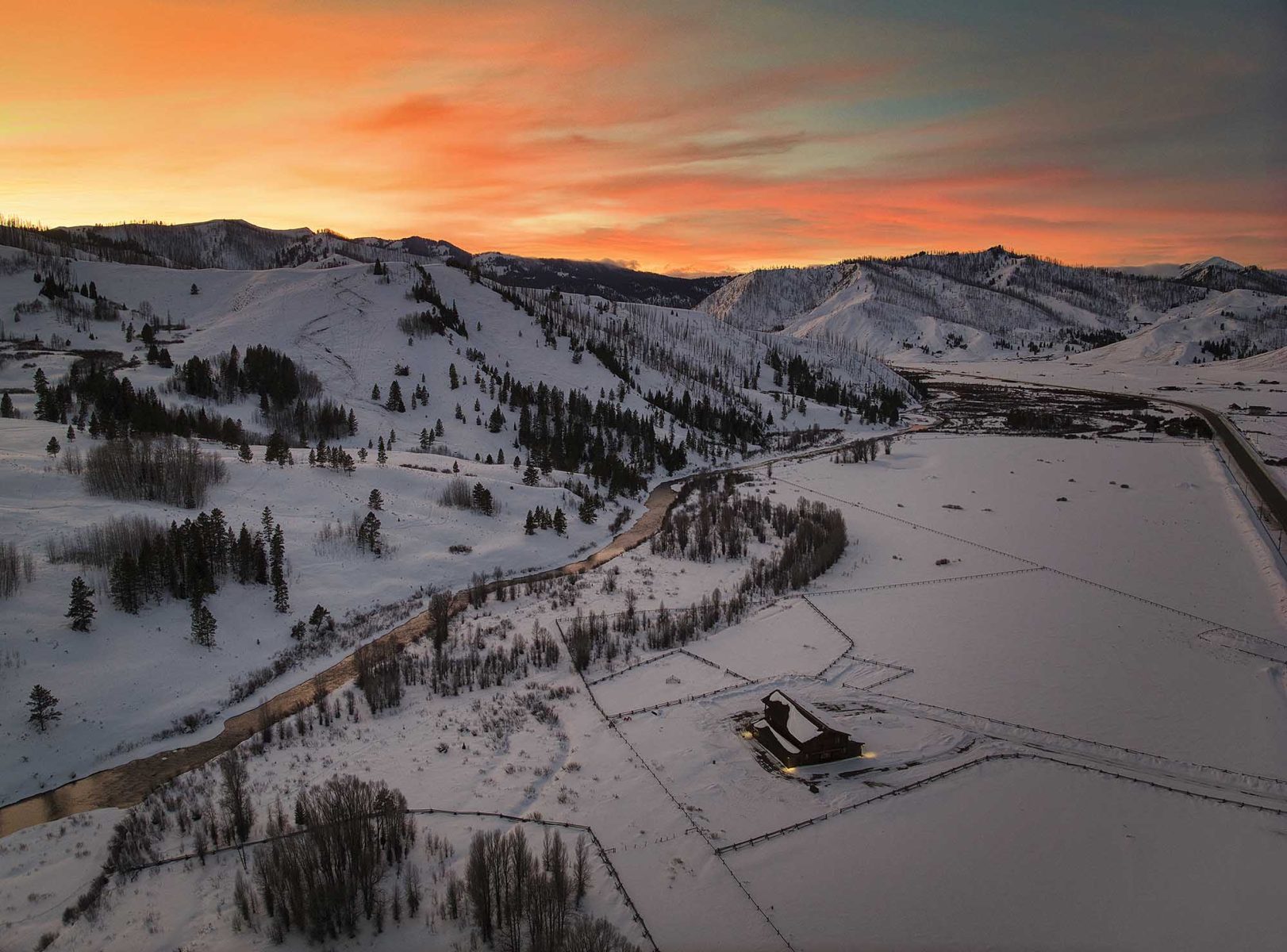
Colorado ranch in winter

Advantages of the Centennial State

Accessibility is one of the things that sets Colorado apart from other mountain states. The Centennial State boasts 12 commercial airports and nine of them are west of Denver. Many of the airports also provide private jet service.

โ€œBecause the transportation infrastructure was largely built to access the resort-anchored valleys, itโ€™s as easy to get to Colorado as it is to get to most major cities,โ€ Hartley says. โ€œWith direct flights from most major markets, owning a ranch in Colorado is convenient. The less time you spend on connecting flights and long drives between the airport and the ranch, the more time youโ€™ll have to enjoy the land with your friends and family.โ€

โ€œThe stateโ€™s commitment to safe travel throughout the year benefits our ranch owners,โ€ Hartley says. โ€œAs an added bonus, it makes coming and going to your favorite resort town easy.โ€

While many of the resort towns trace their beginnings back to mining camps, each has developed its own singular personality over time. For instance, Aspen is known for its luxe flavor while Breckenridge is home to a vibrant party scene while Telluride conjures up the spirit of the Old West.

โ€œWhen I introduce clients to the Colorado ranches that I have listed or have discovered, I act as a matchmaker, too,โ€ Hartley explains. โ€œBuyers and their families have different personalities and distinct interests, so they may be more at home in one area than in another.โ€

To be as knowledgeable as possible, Hartley and his wife spend their weekends with their two young sons in tow exploring the different communities as well as the outdoor activities that the various areas provide. Hartley is an avid fly fisherman and wingshooter who also enjoys skiing, hiking, camping and other pursuits that keep his boys active and engaged in the outdoors.

โ€œOne of things that makes Coloradoโ€™s outdoor lifestyle possible is the weather,โ€ he says. โ€œThe state, unlike some others in the Mountain West, enjoys an average of 300 days of sunshine. The humidity is low. That combination makes winter a wonderland.โ€

โ€œI grew up in North Carolina and 25 degrees there, because of the humidity, feels much colder than a 10 degrees sunny day does here,โ€ Hartley says. โ€œAnd in the summer, air conditioning isnโ€™t necessary up in the higher elevations, which is a big draw for people who are tired of the boiling summers in the South and Texas.โ€

Colorado is also blessed with four distinct seasons, each of which brings a new array of activities. Spring is a chance to enjoy natureโ€™s reawakening as the green wave makes it way up the mountains. Summer is chockfull of hiking, mountain biking, camping, rafting, kayaking and horseback riding. Fall provides its own unique angling opportunities and exceptional big game hunting. Winter, of course, brings snow sports ranging from downhill and cross-country skiing to snowmobiling, snow shoeing and ice skating.

โ€œItโ€™s a rare place where you can be on your ranch working cattle in the morning and on the ski slopes or testing your angling skills on a tailwater fishery in the afternoon,โ€ Hartley says.

Considerations of Owning Colorado Ranches

Colorado ranch with a viewOwning a Colorado ranch is like owning a ranch anywhere in that it provides a tangible asset that delivers solid return on investment and irreplaceable memories. When considering purchasing one of the many beautiful Colorado ranches for sale, there are some things potential buyers need to know to enjoy all the benefits of land ownership.

โ€œColoradoโ€™s land stewardship ethic is strong and is reflected in the stateโ€™s early adoption of conservation easements, a tool that lets landowners protect their land from development and preserve their natural land legacy in perpetuity,โ€ Hartley expresses. โ€œIn addition to the federal tax credits that come with enacting a conservation easement, Colorado has state-level tax benefits.โ€

โ€œEnacting a conservation easement also provides state income tax credits, but if the landowners donโ€™t use those credits they can be sold on a secondary market. This dual market not only benefits landowners but speaks to the high value that state leaders and the public place on the natural landscape,โ€ he says.

The state is home to a host of land trusts, who act as a landownerโ€™s partner in conservation by holding the easement and ensuring its terms are upheld. Some such as Ducks Unlimited or the Rocky Mountain Elk Foundation have a multi-state focus, while others including the Colorado Cattlemenโ€™s Agricultural Land Trust or Colorado Open Lands have a statewide reach and still others have a regional or local focus.

Their goals and objectives vary as well. Some concentrate on habit for specific species, others focus on a geographic area or viewshed while others are mission-driven and strive to do things such as โ€œkeep working lands in working hands.โ€

โ€œConservation easements protect land in perpetuity, so itโ€™s important that the landownersโ€™ mission and goals align with that of the land trust they select,โ€ Hartley expounds. โ€œLike marriage, itโ€™s a relationship that shouldnโ€™t be entered into lightly.โ€

Ranches qualify for special property tax valuation. Agricultural tax valuation, which is based on the landโ€™s productivity instead of its market value, is lower. To maintain the valuation, landowners must be actively engaged in agriculture, but for many that means enacting an annual grazing lease with an area rancher.

โ€œProperties that havenโ€™t already qualified for agricultural valuation may be eligible,โ€ says Hartley, noting that many Colorado ranches already enjoy agricultural valuation. โ€œLandowners will need to work with the local tax district to explore the requirements and then ensure their property meet the qualifications.โ€

In Colorado, just as in many states across the nation, water is an increasingly scarce and valuable resource. The Centennial State uses a system of senior and junior water rights to apportion and manage this life-giving liquid.

โ€œColorado, unlike many states, allows water rights to be freely transferred, so they can be sold separately from the land,โ€ Hartley says. โ€œThis marketplace creates an opportunity to acquire additional water rightsโ€”for a priceโ€”for a property.โ€

He continues, โ€œBecause access to water is prime determinant of sustainability and long-term value, itโ€™s critical that potential buyers work with an informed Broker to ensure that any ranch under consideration has this essential component.โ€

Of course, an informed, educated Broker is the key to making a dream property a reality. โ€œI encourage anyone who loves the outdoors to explore the myriad of Colorado ranches for sale,โ€ Hartley says. โ€œThey are as different as the people who seek to live life full tilt and on their own terms amid the rugged beauty and unmatched productivity of this rare place.โ€
"(Required)" indicates required fields

This field is for validation purposes and should be left unchanged.
Name(Required)
Skip to content