


Stay Up To Date Join Our Newsletter

This field is for validation purposes and should be left unchanged.

by LWP Staff

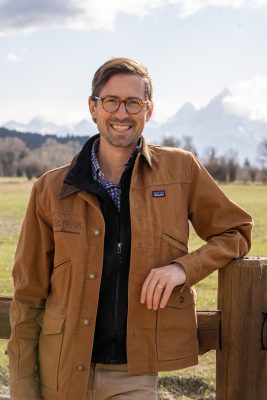
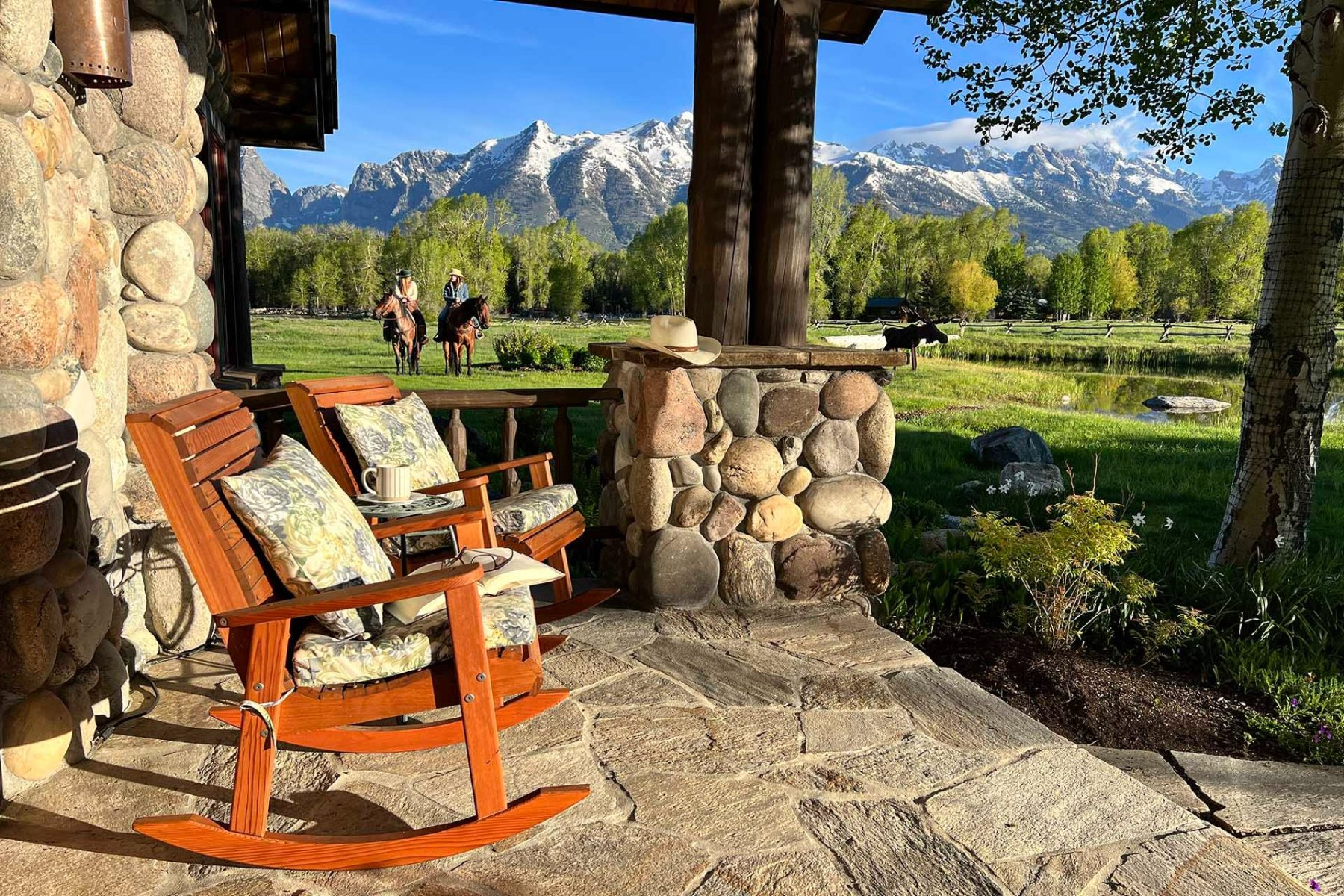
โ€œColorado is the gateway to the Mountain West,โ€ says Brian Hartley, Live Water Propertiesโ€™ Associate Broker specializing in Colorado ranches for sale. โ€œHere, ranching and recreation co-exist harmoniously to create an unparalleled lifestyle.โ€

Itโ€™s no wonder that the two pursuits go together like hand in a glove, be it leather work gloves or insulated ski gloves, because they evolved together. World-famous ski towns, including Telluride and Aspen, got their start as mining boomtowns in the mid-to-late 1800s. Skiing predated Colorado statehood in 1876, but in the early days it provided practical winter transportation for the miners seeking fortunes among the peaks.

Texas drovers first brought Longhorns to western Colorado ranches to fatten on the abundant native prairies. As the mining towns boomed, cattlemen moved into the surrounding valleys to meet the minersโ€™ ever-growing demand for beef.

By 1914, skiing had officially begun to leave its utilitarian roots and become a recreational pursuit. In that year, Howelsen Hill, which is now the longest continuously operating ski area in the country, opened. Twenty-five years later, the stateโ€™s first ski lift opened near Gunnison.

Over time, the ski resort industry began to attract winter sports enthusiasts from around the world and became a major economic force in the state. (Today, the economic impact of snow sports on the state exceeds $1 billion annually.) As a result, state leaders developed infrastructure including airports and well-maintained all-weather roads to support the burgeoning industry with the goal of making coming and going easy.

Through the years, ranching families continued to take advantage of the rich productivity of the valleys and the alpine meadows to raise healthy protein. As a benefit of their stewardship, working lands remained open providing habitat for wild game and flowing streams for angling.

In the places where private land abuts federal and state-owned land, the opportunities are amplified.

โ€œIf I were forced to choose one word to describe Coloradoโ€™s outdoors lifestyle, it would be accessible,โ€ states Hartley, who has specialized in recreational Colorado ranches since 2006. โ€œOutdoor experiences of all types are available around every corner, behind every tree and over every hill.โ€

Colorado ranch in winter

Advantages of the Centennial State

Accessibility is one of the things that sets Colorado apart from other mountain states. The Centennial State boasts 12 commercial airports and nine of them are west of Denver. Many of the airports also provide private jet service.

โ€œBecause the transportation infrastructure was largely built to access the resort-anchored valleys, itโ€™s as easy to get to Colorado as it is to get to most major cities,โ€ Hartley says. โ€œWith direct flights from most major markets, owning a ranch in Colorado is convenient. The less time you spend on connecting flights and long drives between the airport and the ranch, the more time youโ€™ll have to enjoy the land with your friends and family.โ€

โ€œThe stateโ€™s commitment to safe travel throughout the year benefits our ranch owners,โ€ Hartley says. โ€œAs an added bonus, it makes coming and going to your favorite resort town easy.โ€

While many of the resort towns trace their beginnings back to mining camps, each has developed its own singular personality over time. For instance, Aspen is known for its luxe flavor while Breckenridge is home to a vibrant party scene while Telluride conjures up the spirit of the Old West.

โ€œWhen I introduce clients to the Colorado ranches that I have listed or have discovered, I act as a matchmaker, too,โ€ Hartley explains. โ€œBuyers and their families have different personalities and distinct interests, so they may be more at home in one area than in another.โ€

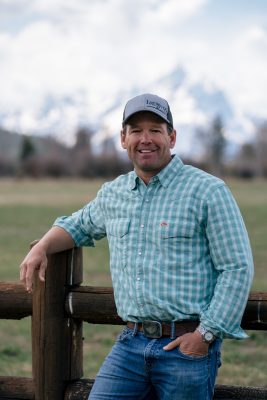
To be as knowledgeable as possible, Hartley and his wife spend their weekends with their two young sons in tow exploring the different communities as well as the outdoor activities that the various areas provide. Hartley is an avid fly fisherman and wingshooter who also enjoys skiing, hiking, camping and other pursuits that keep his boys active and engaged in the outdoors.

โ€œOne of things that makes Coloradoโ€™s outdoor lifestyle possible is the weather,โ€ he says. โ€œThe state, unlike some others in the Mountain West, enjoys an average of 300 days of sunshine. The humidity is low. That combination makes winter a wonderland.โ€

โ€œI grew up in North Carolina and 25 degrees there, because of the humidity, feels much colder than a 10 degrees sunny day does here,โ€ Hartley says. โ€œAnd in the summer, air conditioning isnโ€™t necessary up in the higher elevations, which is a big draw for people who are tired of the boiling summers in the South and Texas.โ€

Colorado is also blessed with four distinct seasons, each of which brings a new array of activities. Spring is a chance to enjoy natureโ€™s reawakening as the green wave makes it way up the mountains. Summer is chockfull of hiking, mountain biking, camping, rafting, kayaking and horseback riding. Fall provides its own unique angling opportunities and exceptional big game hunting. Winter, of course, brings snow sports ranging from downhill and cross-country skiing to snowmobiling, snow shoeing and ice skating.

โ€œItโ€™s a rare place where you can be on your ranch working cattle in the morning and on the ski slopes or testing your angling skills on a tailwater fishery in the afternoon,โ€ Hartley says.

Considerations of Owning Colorado Ranches

Colorado ranch with a viewOwning a Colorado ranch is like owning a ranch anywhere in that it provides a tangible asset that delivers solid return on investment and irreplaceable memories. When considering purchasing one of the many beautiful Colorado ranches for sale, there are some things potential buyers need to know to enjoy all the benefits of land ownership.

โ€œColoradoโ€™s land stewardship ethic is strong and is reflected in the stateโ€™s early adoption of conservation easements, a tool that lets landowners protect their land from development and preserve their natural land legacy in perpetuity,โ€ Hartley expresses. โ€œIn addition to the federal tax credits that come with enacting a conservation easement, Colorado has state-level tax benefits.โ€

โ€œEnacting a conservation easement also provides state income tax credits, but if the landowners donโ€™t use those credits they can be sold on a secondary market. This dual market not only benefits landowners but speaks to the high value that state leaders and the public place on the natural landscape,โ€ he says.

The state is home to a host of land trusts, who act as a landownerโ€™s partner in conservation by holding the easement and ensuring its terms are upheld. Some such as Ducks Unlimited or the Rocky Mountain Elk Foundation have a multi-state focus, while others including the Colorado Cattlemenโ€™s Agricultural Land Trust or Colorado Open Lands have a statewide reach and still others have a regional or local focus.

Their goals and objectives vary as well. Some concentrate on habit for specific species, others focus on a geographic area or viewshed while others are mission-driven and strive to do things such as โ€œkeep working lands in working hands.โ€

โ€œConservation easements protect land in perpetuity, so itโ€™s important that the landownersโ€™ mission and goals align with that of the land trust they select,โ€ Hartley expounds. โ€œLike marriage, itโ€™s a relationship that shouldnโ€™t be entered into lightly.โ€

Ranches qualify for special property tax valuation. Agricultural tax valuation, which is based on the landโ€™s productivity instead of its market value, is lower. To maintain the valuation, landowners must be actively engaged in agriculture, but for many that means enacting an annual grazing lease with an area rancher.

โ€œProperties that havenโ€™t already qualified for agricultural valuation may be eligible,โ€ says Hartley, noting that many Colorado ranches already enjoy agricultural valuation. โ€œLandowners will need to work with the local tax district to explore the requirements and then ensure their property meet the qualifications.โ€

In Colorado, just as in many states across the nation, water is an increasingly scarce and valuable resource. The Centennial State uses a system of senior and junior water rights to apportion and manage this life-giving liquid.

โ€œColorado, unlike many states, allows water rights to be freely transferred, so they can be sold separately from the land,โ€ Hartley says. โ€œThis marketplace creates an opportunity to acquire additional water rightsโ€”for a priceโ€”for a property.โ€

He continues, โ€œBecause access to water is prime determinant of sustainability and long-term value, itโ€™s critical that potential buyers work with an informed Broker to ensure that any ranch under consideration has this essential component.โ€

Of course, an informed, educated Broker is the key to making a dream property a reality. โ€œI encourage anyone who loves the outdoors to explore the myriad of Colorado ranches for sale,โ€ Hartley says. โ€œThey are as different as the people who seek to live life full tilt and on their own terms amid the rugged beauty and unmatched productivity of this rare place.โ€

A cause-and-effect case study of what happens when urban and suburban migration collides with rural areas and natural resources

by LWP Staff

Water is a limiting factor in soil chemistry, agriculture, wildlife managementโ€”and life.

David K. Langford, retired CEO of the Texas Wildlife Association, respected Texas conservationist and noted nature and cowboy photographer. Photo by Lillian P. Russell

โ€œThe availability of natural resources, particularly water, is the foundation of our entire economy and our way of life,โ€ said David K. Langford, retired CEO of the Texas Wildlife Association (TWA), noted Texas conservationist and nature and cowboy photographer who lives in Comfort, Texas. โ€œAnd yet, most people take the availability of water for granted until it starts to disappear.โ€

Texas is coming to face the truth that has become a harsh reality for much of the western U.S. with California as a notable example. While parts of Texas have always been desert, most of the state received more abundant rainfall disrupted by the periodic droughts that have always characterized life in the Lone Star State. With changing weather patterns, the dry line demarcating the desert climate to the west is seemingly moving farther east, throwing more of the state into extended drought.

To compound this effect, Texas is experiencing exponential growth that began in the mid-1990s and just continues to pick up speed. Today, 1,400 people move into the state every day, which translates into more than 500,000 new residents annually. To accommodate that growth, approximately 660 acres of working land is being lost to development, placing more demand on the remaining open space to produce life giving air, water, food, fiber and other essential ecosystem services as demand for those goods increase apace.

The Texas Hill Country, region that extends north and west of Austin and San Antonio to portions of Concho, Tom Green, Irion, Sterling, Glasscock, Reagan, and Irion counties in the west, has often been compared to Tuscany because of its rugged beauty. Previously, the domain of hardy pioneers who raised sheep, goats and cattle, the central Hill Country, which is closest to Austin and San Antonio, has become one of the most sought-after residential destinations in the state.

โ€œIn the aftermath of COVID, as people realized the value of ‘elbow room’ and pioneered ways to work from home, the flood gates of new residents descended on rural Texas,โ€ Langford said.

Unlike many places in the United States, the Texas Hill Country provides a cause-and-effect case study on what happens when urban and suburban migration collides with rural areas and natural resources.

The region sits atop the Edwards Plateau, an area characterized by shallow soils overlying porous limestone formations known as karst limestone.

Two aquifers, the Edwards and Trinity, hold water within the karst. The aquifers are relatively shallow and recharged directly or indirectly by the rain that falls. Crystalline springs bubbling to the surface from the underlying aquifer not only define the landscape but their flowโ€”or the lack thereofโ€” provide visible evidence of the aquifersโ€™ health.

โ€œOur springs are the proverbial canaries in the coal mine,โ€ said Langford. โ€œAnd theyโ€™re struggling to sing. Many of them have stopped.โ€

Victims of the drought and over pumping include Jacobโ€™s Well, an iconic spring-fed swimming hole outside of Wimberley that quit flowing for the fourth time since 2000. To put that in perspective, the spring didnโ€™t quit flowing in the seven-year โ€œdrought of recordโ€ that gripped Texas in the late 1940s through the mid-1950s and stopped production on 50 percent of the stateโ€™s farms.

The stateโ€™s spring-fed rivers including the Guadalupe, Frio, Llano and more have fallen victim as well. None are flowing. This not only impacts cities and towns, but life in the estuaries of the Gulf of Mexico.

To explain the relationship between the aquifers and the springs in the Hill Country, Langford uses the analogy of a bathtub with an overflow valve.

โ€œThe aquifer is the bathtub, and the springs are the overflow valve,โ€ Langford said. โ€œWhen the bathtub is full the overflow spills out through the valve, but when the bathtub empties nothing flows through the valve.โ€

Langford, who spent a portion of his early career in real estate, understands and appreciates the need for development and the urge of people to live in a beautiful, natural setting like the Hill Country.

โ€œThe Hill Country is a special placeโ€”and I canโ€™t hold it against people for wanting to live here,โ€ Langford said. โ€œMy family has chosen to call this place home since the late 1800s, but there is a right way and a wrong way to leave a mark on the landscape.

โ€œThe challenge is achieving sustainability by recognizing the limits of resources, balancing supply and demand, and empowering landowners, new and old, with education, so they canโ€”and willโ€”responsibly steward the resources in their care.โ€

Two Experiences, One Concern

Langfordโ€™s next birthday will mark his 82nd lap around the sun. His roots are seven generations deep in the Texas Hill Country, a place thatโ€™s beauty belies its harshness. Thin soils and periodic droughts, some extended, have long tested the fortitude and resilience of those trying to coax a living from the land.

When his great grandfather Alfred Giles founded Hillingdon Ranch near Comfort in 1886, it was the presence of water that offered the promise of a future. The original 13,000-acre ranch, which is still a working ranch producing pedigreed Black Angus cattle, dual-purpose sheep and Angora goats, is home to numerous crystalline springs that for millennia bubbled up unbidden out of the ground from the underlying Edwards Aquifer.

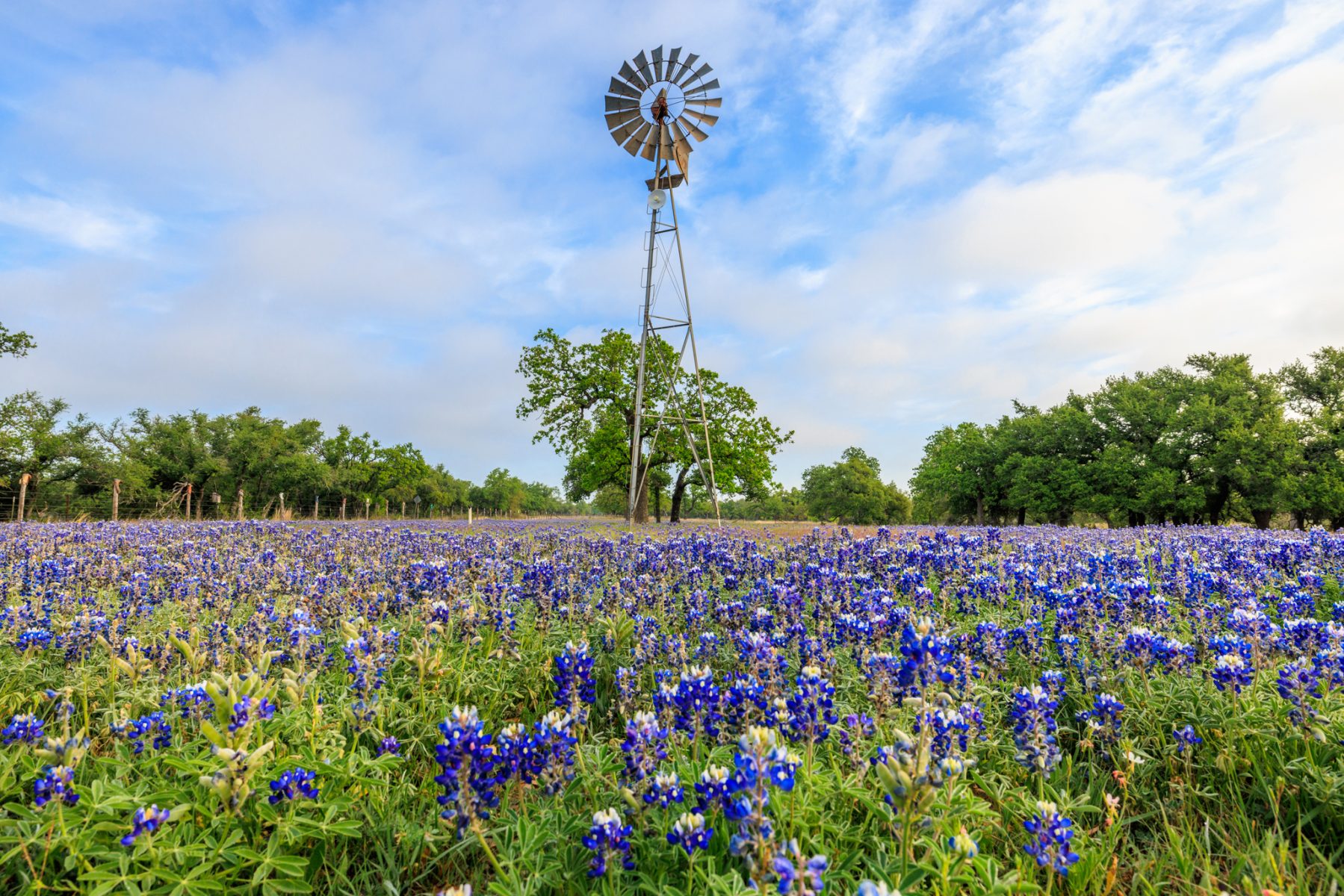
Texas Hill Country Ranches
Spring-fed Block Creek, the primary water source on Hillingdon Ranch that supplies the nearby Guadalupe River, during a normal flow about two years ago. by David K. Langford/Western Photography Company

In fact, one of Langfordโ€™s earliest memories and his first lesson in conservation came from a spring just down from his grandparentโ€™s home on the ranch. As the second oldest of 13 cousins, the job of keeping the family water bucket full fell to Langford and his older cousin.

Throughout the day, the bucket was emptied as people quenched their thirst and performed household tasks. Every empty bucket required the cousins to walk to the spring, fill the bucket and carefully carry it back to its perch on their grandparentsโ€™ kitchen table.

โ€œOur family depended on that water,โ€ said Langford. โ€œEach trip etched the outline of the bucket handle into my palm and the importance of water into my subconscious. Water is not something to be taken lightlyโ€”it was essential to our life.โ€

Today, he and his wife Myrna, live on their portion of the family ranch in a home restored by Langfordโ€™s mother in 1960. For the first 40 years of its existence, the domestic well that supplies their home maintained a relatively steady level of 125 feet.

In the last 20 years, the well has dropped 80 feet. Their personal water use hasnโ€™t increased. They are on a waiting list for the water well driller to deepen their well to reach the receding water table.

They are not alone. A long-time neighbor on another historic ranch is hauling water daily to fill a 50-gallon storage tank on her porch because her well has gone completely dry. She, too, is on the waiting list for the drillers.

Since the Langfords moved to the ranch full-time in 2000, two things have changed. First, the rainfall, never reliable, has become more unpredictable. According to Langford, who has family weather observations dating back to the 1880s, the region has been in a constant state of drought except for flood events, the largest of which occurred in 2002 and 2004.

On the greater Hillingdon, the family has about 75 water gaps [small stretches of fence that cross creeks, streams and other water courses and are designed to washout in the case of high water to protect the integrity of the fence on either side]โ€”and the family has fixed very few water gaps in the past 19 years. Historically, repairs were a common occurrence.

The second factor is growth, locally and regionally. In 2000, the population of Kendall County, home to Hillingdon Ranch, was 23,980 and today it is 47,540. Bexar County, home to San Antonio about 47 miles to the east, has experienced even more extreme growth. In 2000, county residents numbered 1.39 million. Today, there are 2.12 million residents.

โ€œWhile the rainfall patterns have changed, weโ€™ve had enough rain to maintain the landscape under our familyโ€™s conservation-oriented management,โ€ Langford said. โ€œThe major impact on our water is outside our control. More straws are drinking out of the same cup and the cup is being drained at an unsustainable rate.โ€

Mark Harman, Texas Managing Broker for Live Water Properties based in Fredericksburg, Texas, moved to the Hill Country with his wife Pam about 15 years ago. As former Dallasites turned small town residents, they have had a unique view of the changes around them.

Harmanโ€™s father introduced the couple to the region when he sold his oil and gas business based in East Texas and retired to Lakeway, a lakefront community west of Austin that is a gateway to the Hill Country. He also purchased a ranch in Gillespie County, just outside Fredericksburg.

Over time, at the elder Harmanโ€™s invitation, the couple began exploring the Texas Hill Country. Eventually the couple decided to trade in their fast-paced life in Dallas, where they were regulars on the society pages, for the slower pace of Fredericksburg, a much smaller community.

โ€œBefore we came here Pam and I were incredibly social, serving on a lot of charitable boards, so our calendar was packed with dinners at starred restaurants, cocktail parties and black-tie galas,โ€ Harman said. โ€œI wasnโ€™t convinced that slower was better, but to my surprise it captured Pamโ€™s imagination.โ€

And in 2008, they took the plunge. Buying a house in Fredericksburg, they found themselves doing things they would have never done in Dallas such as hanging a porch swing where Pam could enjoy her morning coffee as she watched the sun rise. At the time, Fredericksburg was in the earlier stages of its reinvention from small German farming community to must-see place-to-be. New restaurants, wineries and boutiques were beginning to pop up.

Over the past 15 years, coinciding with Texasโ€™ growth, the popularity of Fredericksburg and the surrounding Hill Country surged. Fredericksburg is now a destination for tourists from across the state, nation and globe. It is now one of the stateโ€™s most coveted zip codes.

The Harman’s have since staked a claim on acreage outside of town to enjoy privacy and elbow room within an easy drive of Fredericksburgโ€™s amenities. While as a ranch broker, Harman is committed to sharing this corner of paradise with new residents, he is concerned that the unplanned growth may cause the fragile ecological region to be โ€œloved to deathโ€ as the natural resources are overtaxed.

โ€œWater is precious, but 90 percent of the people I talk to have this misperception that it just flows out of the tap like magicโ€”and that itโ€™s everywhere and will be forever,โ€ Harman said. โ€œItโ€™s a resource that has to be managed and safeguarded through responsible use.โ€

Of course, its relative scarcity, makes water, especially live water an extremely valuable asset.ย  The only upside for an extended drought is that the conditions make it obvious which is the most persistent live water.

โ€œFor those who want to steward the valuable bounty of live water, now is the time to start your search,โ€ Harman said.

The Biggest Straw

In Texas, groundwater use and surface water use are regulated differently. Surface water is deemed a possession of the citizens of Texas and governed by the Texas Commission on Environmental Quality.

Groundwater, on the other hand, is the property of the person who owns the land above it. Texas is the last state to manage its groundwater under this law known as โ€œRule of Capture.โ€ As described by the Texas Supreme Court, the Rule of Capture โ€œessentially allows, with some limited exceptions to pump as much groundwater as the landowner chooses, without liability to neighbors who claim that pumping has depleted their wells.โ€

In the 120 years since the state adopted the rule, Texas has grown into one of the largest economies and groundwater users in the world. Data from the United Nations Food and Agricultural Organization indicate that based on the 1997-2017 median extraction volume, Texas would be the would be the worldโ€™s 11th-largest groundwater pumper, extracting about 10 million acre-feet per year, or slightly less than Turkey or slightly more than Argentina.

โ€œIn practice, the Rule of Capture means the one with the biggest straw wins,โ€ Langford said. โ€œIn the Hill Country and all across Texas, the number of straws is outstripping the supplyโ€”and the aquifers recharge rateโ€”but people just keep installing straws.โ€

To address a changing Texas, the Legislature, in 1997, passed SB 1, landmark legislation that instituted a bottom-up approach to state water planning through 16 regional planning groups representing diverse stakeholders. At the same time, the Legislature confirmed that groundwater conservation districts are the preferred method of groundwater management,โ€ but prevented districts from prohibiting the export of groundwater.

To further complicate the situation, many different groundwater districts overlay the same aquifers. Each one has its own interpretation of what is acceptable and sustainable. Neighboring districts may have completely different philosophies governing the shared water. And if any land lies outside the boundaries of groundwater conservation districts, it is an unregulated โ€œwild west of water pumping.โ€

And then, the groundwater districts have limited financial resources. They have no budgets for enforcement, to pay for research that provides the best data for decision-making or withstand legal challenges.

Instead of inspiring responsibility and conservation, the Rule of Capture and patchwork of local groundwater districts often engender greed and arrogance. Itโ€™s a subterranean โ€œtragedy of the commons,โ€ a situation in which individuals with access to a public resource (aka a common) act in their own interest and, in doing so, ultimately deplete the resource.

In the Hill Country, the tragedy is playing out in many ways. High-density residential sub-divisions boasting hundreds of homes where each ยผ-acre homesite requires thousands of gallons of water annually. Elaborate landscaping with plants more suitable to water-rich England than arid Texas, maintained with high-volume irrigation.

And perhaps most rankling, vanity ponds that landowners drill wells to supply the ponds and maintain a constant water level. In one extreme instance, a landowner has planned to drill a new well within 50 feet of the neighborโ€™s well intending to supply water to his pond.

โ€œIt is against state law to pump groundwater to surface water impoundments,โ€ Langford said. โ€œAnd yet, when many people are confronted with this fact their response is, โ€˜Itโ€™s my land. I can do what I want. Sue me, but Iโ€™ll win.โ€™

โ€œUnfortunately, arrogance and selfishness seem to have replaced concern for the common good that traditionally marked life in rural Texas.โ€

Harman attributes some of the seemingly blatant irresponsibility to societyโ€™s instant gratification mindset and its reluctance to think long-term.

โ€œPeople just donโ€™t know or understand how vital the water is,โ€ Harman said. โ€œI canโ€™t tell you how many times, Iโ€™ve reminded people that if they pump all the water out from under their property, it will no longer have value. If nothing else, protecting water protects your investment.โ€

Texas Hill Country water
by Jordan McQueen

What Can Be Done in the Texas Hill Country

The challenges facing the Texas Hill Country need a two-piece fix. First is legislative.

Langfordโ€™s suggestions to the Legislature include changing the laws so groundwater districts are not required to approve any new permits that are overtly wasteful. He also suggests providing them with adequate funding so they can defend themselves in lawsuits involving permitting disputes that arise from denials, or alternatively like school districts, fall under the โ€œprotectionโ€ of the stateโ€™s Attorney General.

Another fix involves providing adequate funding, so small groundwater districts can obtain the highly local data and modeling that is needed to truly understand how groundwater pumping impacts surface water and to identify the recharge area for springs.

In addition, groundwater conservation districts that manage production from the same aquifer need to collaborate to ensure that management goals and permit allocations are consistent to maintain and protect spring flow.

Furthermore, it may be necessary to enact a statute mandating that groundwater conservation districts ensure that groundwater is managed in a way that avoids adverse impacts to spring flow and baseflow. It would also be beneficial to develop a management framework in place that protects groundwater to sustain springs.

The second fix is even more challenging than changing groundwater laws in a private property rights state. It requires wholesale education and a widespread change of societyโ€™s attitude.

โ€œOur citizenry nationwide suffers from natural resource illiteracy,โ€ Langford said. โ€œThey have no clue how natural resources work or why they donโ€™tโ€”and thatโ€™s to the detriment of us all.

Harman concurred, โ€œEverybody who lives in the Hill Country needs to be educated on the importance of our water and how what we do on the surface affects what goes on below the ground. Whether you have a quarter-acre yard or a 1,500-acre ranch, we all have to respect the limits of our water supply and do our part to manage and conserve it.โ€

When asked what he would tell all his new neighbors in the Hill Country, Langford said his message would be consistent for each and every one.

โ€œAlways be mindful of the water,” he said. “The water resources here are unlike anywhere else.โ€

Langford continued, “Everybody wants to live their dream including us, but it has to be done realistically and sustainably. No one’s dream should destroy anyone else’sโ€”or the place we all choose to call home.”
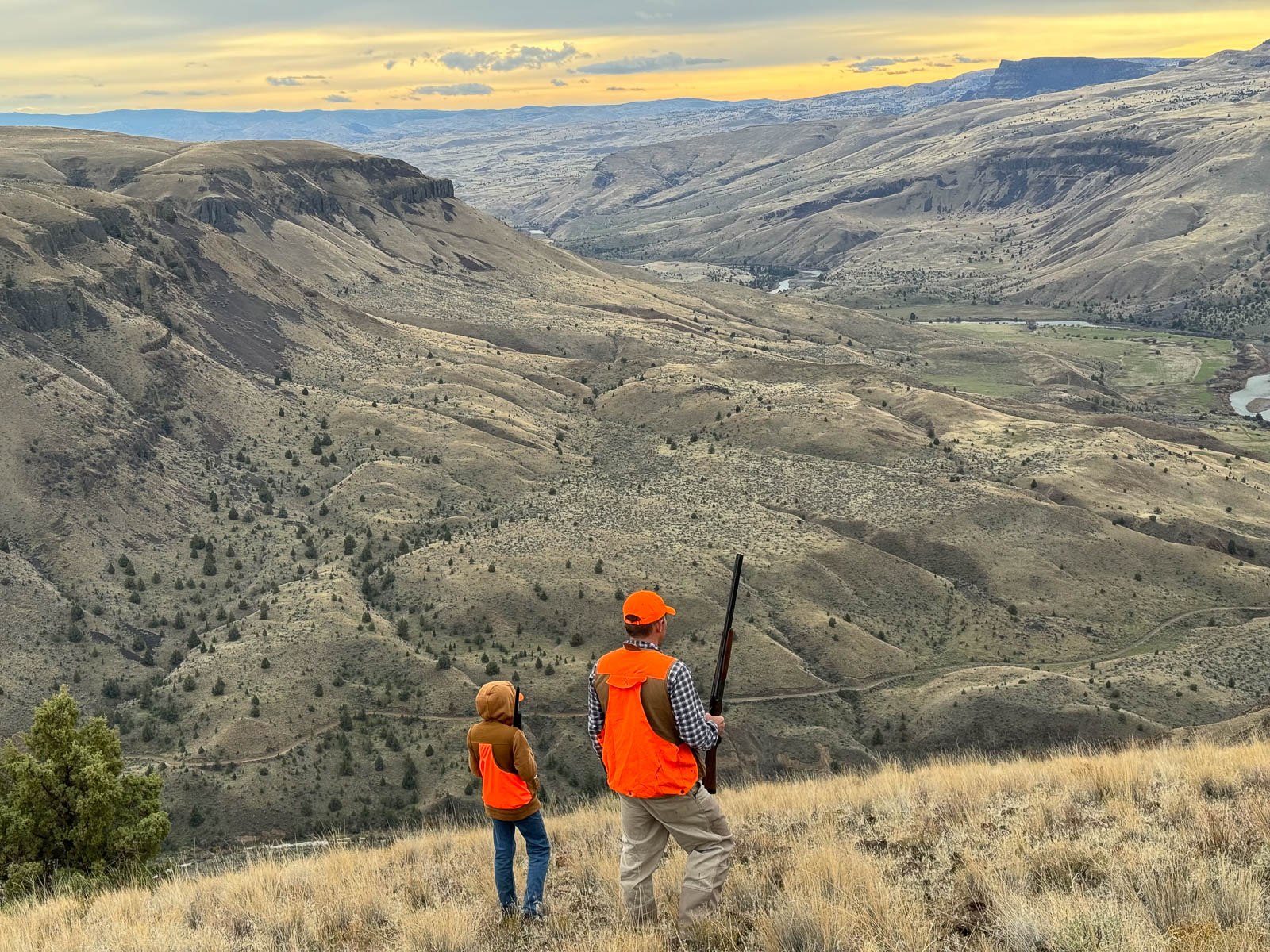
Discover this year’s Big Game Hunting Report for an opportunity to engage with our brokers on their insights, revealing the interplay between land, wildlife, and the unique aspect of each hunting ranch. As summer transitions to fall, our focus shifts from the streams to the abundant big-game prospects within the backcountry. With cooler temperatures and shorter days, the allure of venturing through aspen groves in pursuit of elk or seeking the ultimate deer trophy takes precedence. In this report, our seasoned Brokers, motivated by their deep-rooted passion for big game hunting, contribute years of dedicated study and firsthand experience to this pursuit of finding the ideal hunting ranch for sale. Read on to learn about the Game Hunting Ranches of 2023.

BIG GAME HUNTING RANCHES IN COLORADO

Penn Ranch
Durango, Colorado | 343 Acres
Located in GMU 751, the ranch enjoys visits from abundant wildlife. Deer and elk often move throughout the property, and Bighorn sheep can be found higher up on the cliffs. The unit allows for over-the-counter tags during the second and third rifle seasons. Most of the lands in GMU 751 are wintering big game areas, making it great for later-season hunting. For the early season, hunters succeed in the โ€œdark timberโ€ of the north-facing slopes in the spruce/fir and aspen forests. The ranchโ€™s proximity to the 500,000-acre Weminuche Wilderness โ€“ the largest wilderness area in Colorado โ€“ allows game animals to thrive. Explore the Penn Ranch

Dancing Pine Ranch
Durango, Colorado | 182 Acres
Nestled among tall Ponderosa pines, oak-covered hills, and sweeping meadows highlighted by the Pine River, this all-around sporting ranch blends sophisticated living with a charming Western appeal. The ranch is home to elk and deer, creating excellent hunting opportunities. With abundant game grazing in the meadows and watering in the river, the hunting experience on Dancing Pine Ranch is both exciting and beautifully scenic. Explore Dancing Pine Ranch

J Diamond B Ranch
Lake George, Colorado | 448 Acres
GMU 50 is known for its high-quality elk, mule deer, and pronghorns. The unit comprises significant private land and several state wildlife areas. It serves as wintering grounds for deer and elk, making it ideal for late-season hunting. GMU 50 features aspen stands and dense timber, providing suitable cover for the game. Drawing a license for archery and first and second rifle seasons usually requires 0 to 1 preference points, while third and fourth rifle seasons typically require 1 to 3 preference points. Landowner vouchers can also be pursued; the ranch qualifies and has historically received landowner vouchers. Explore J Diamond B Ranch

Buck Fever Ranch
Norwood, Colorado | 1,384 Acres

Buck Fever Ranch is located in Game Management Unit (GMU) 70, well-known for its big mule deer bucks. This 1,500 square-mile unit borders Utah and runs about 75 miles southeast, rising from less than 5,000 ft. to over 14,000 ft. above sea level. Mule deer and elk thrive in this unit. With an unlimited number of elk tags sold over the counter for the second and third rifle seasons, heavy hunting pressure gives private landowners an advantage. The unit is nearly 70% public and consists of flat farmlands in the valleys and broken country in the transition areas ranging from about 6,000 ft. to 8,500 ft. Steep mountains measure over 8,500 ft. with imposing peaks above timberline ranging from 12,500 ft. to over 14,000 ft. Within view of the ranch is GMU 61, comprised primarily of the western half of the Uncompahgre Plateau. It runs about 70 miles from Gateway near the Utah line to Placerville west of Telluride. The massive 1,376 square mile Uncompahgre Plateau is a flat-top mountain range that varies between 8,300 ft. and 9,200 ft. above sea level and stretches about 90 miles from the northwest to the southeast. The plateau drops into huge, ruggedly steep canyons, overlooking lowlands from 4,500 ft. to 5,500 ft in elevation. This unit consistently yields high success rates for big elk and mule deer. GMU 62 draws great attention because it shares the Uncompahgre Plateau with Unit 61. The Divide Road separates Unit 62 to the northeast and Unit 61 to the southwest. A healthy number of tags can be purchased over the counter (OTC) for elk in Unit 62. Explore Buck Fever Ranch

Seven Springs Ranch
Glenwood Springs, Colorado

The Seven Springs Ranch is located in GMU 43 and is known for elk, mule deer, and bears. With BLM flanking the deeded acreage on two sides and the southern boundary leading directly into White River National Forest, the ranch benefits from grand public land surroundings and access. While the elk primarily inhabit the public land in GMU 43, hunting pressure often drives them to the nearby private holdings, where there is much less pressure. The combination of forested areas and lush range lands throughout the ranch creates an excellent spot for mule deer and elk. Gambel oak and other foliage fill large parts of the property, supplying a favorite food source to keep wildlife around. A mix of healthy timber and aspens provides cover. Abundant serviceberries and chokecherry berries bring bears from the surrounding area. There is a hunting access easement through CPW on the property for deer and elk for two tags per species. Explore Seven Springs Ranch

BIG GAME HUNTING RANCHES IN IDAHO

Twin Peaks Guest Ranch
Salmon, Idaho | 677.81 Acres
The Ranch lies within zone 28 of Region 7 of Idahoโ€™s game management unit for elk and deer. These zones are coveted by regional sportsmen who typically experience above-average hunter success rates and the chance to harvest trophy-sized animals due to impressive genetics. A rifle range onsite provides the opportunity and convenience to hone oneโ€™s skills before entering the field. The range facilities include a pistol bay, skeet area, and a covered bench area for stable, long-range practice up to 1,000 yards. Explore Twin Peaks Guest Ranch


Henry’s Fork Highlands
Ashton, Idaho | 505 Acres
Henryโ€™s Fork Highlands has all the ingredients to attract and hold big game. The rich meadows, deep canyons, and onsite water resources provide the feed, cover, and water that deer, elk, and black bear need daily. Both deer and elk are readily seen on the property and historically have been selectively hunted on the ranch. In addition to the deeded lands, the National Forest lands adjacent to the north and east provide endless opportunities that can be conveniently accessed from the ranch. Due to the diversity of terrain and the size of the ranch, it is typical for the population of deer and elk to increase as public pressure on the National Forest increases. Located in the Island Park Zone, Henryโ€™s Fork Highlands provides excellent big game hunting opportunities both onsite and on the adjacent federal lands. Explore Henry’s Fork Highlands

BIG GAME HUNTING RANCHES IN MONTANA

Bridger Creek Gem
Bozeman, Montana | 71 Acres

Bridger Creek Gem is located in a wild area with an incredibly diverse list of wildlife.
Elk, deer, black bear, and mountain lion can all be found and hunted in the areaโ€™s mountains and forests. Moose, Bighorn sheep, and mountain goats are also found in the area. These animals require a specific tag from Montana FWP to harvest; start applying and building preference points for these tags now. Yellowstone National Park and the Gallatin National Forest are some of the nationโ€™s best places to find protected animals like grizzly bears, lynx, wolverines, and wolves. Explore Bridger Creek Gem

Dog Creek Acreage
Hilger, Montana | 1,078 Acres

Some of Montanaโ€™s best big game hunting opportunities are found in the central portion of the state. The mountains and plains comprising the region harbor all of the recognized big game species in Montana, including elk, whitetail mule deer, antelope, black bear, mountain lion, moose, bighorn sheep, and rocky mountain goats. Some of the largest elk herds in the state are found in this region. Mule deer and antelope populations are also found on Dog Creek Acreage in fair numbers. The Swindell portion of the property borders State of Montana land, offering additional hunting options. Explore Dog Creek Acreage

Marias River Ranch
Loma, Montana | 1,798 Acres

The ranch is in region 400, which is managed for trophy quality better than most of the state. This is achieved by closing the season just before the rut. Mule and whitetail deer are constant ranch residents, with pronghorn antelope also commonly seen. Deer numbers and trophy quality are both outstanding. Explore Marias River Ranch

Milk River Farm
Valley County, Montana| 520 Acres

Some of Montanaโ€™s best hunting opportunities are found in the state’s northeastern portion. The region harbors big game species, including whitetail, mule deer, antelope, mountain lion, record-class elk, and Bighorn sheep. The Milk River Farm supports a varied wildlife community, including whitetail and mule deer. With water, cover habitat, and abundant feed found on the farm, deer, and upland bird hunting opportunities are excellent. The owner purchased the property principally as a hunting retreat. The right mix of habitat regimes preferred by wildlife has resulted in healthy populations of game animals and birds – particularly pheasants, which are found in strong numbers on the property. Milk River Farms lies in Montana Fish Wildlife & Parks Region 6, specifically antelope, deer, and elk Hunting District 630. For 2023, the archery season for all species opens on September 2nd, while the general rifle season for antelope opens on October 7th and October 21st for elk and deer. Explore Milk River Farm

Milk River Farm Deer

BIG GAME HUNTING RANCHES IN OREGON

R & C Ranch
Fossil, Oregon | 5,430 Acres

The R&C Ranch is home to healthy populations of mule deer, as well as Rocky Mountain elk, pronghorn antelope, bighorn sheep, and barbary sheep. The area is known for its heavy-horned mule deer bucks. The resident elk herd is estimated at 600 head and moves between multiple private ranches in the area. The elk hunting season is one of the longest in the state at five weeks and is entirely located in the Biggs Big Game Unit. While landowner preference (LOP) tags are available (five elk and five deer tags), because there is so little public ground in this unit, over-the-counter tags are also plentiful. Pronghorn antelope tags are also available in subunits of the Biggs Unit; however, getting a tag outside the LOP system can take many years. Explore R&C Ranch

BIG GAME HUNTING RANCHES IN WYOMING

Ross Plateau
Jackson Hole, Wyoming | 159 Acres

Set on the eastern flank of Munger Mountain, Ross Plateau sits in prime habitat for elk, mule deer, and black bear. The deeded land and the adjacent public lands are surrounded by National Forest, providing excellent archery and rifle hunting opportunities. During the rut, which generally peaks in mid-September, bull elk can often be heard bugling from the deeded land, and it is not uncommon for these elk to make their way down to feed in the meadows or drink from the pond. Mule deer are also frequent visitors and can be seen throughout the summer and fall on the property. Located in Elk Hunt Area 85 and Deer Hunt Region H, Ross Plateau provides excellent big game hunting opportunities. Explore Ross Plateau

Baker Creek Ranch
Sheridan, Wyoming | 330 Acres

The Sheridan area and the nearby Bighorn National Forest region boasts an abundance of diverse wildlife, enticing hunters and photographers alike to the area. These ancient hunting grounds are comprised of public and private lands, both integral to maintaining the myriad of species for which Wyoming is known, including mule deer, whitetail deer, antelope, elk, moose, and black bear. Various bird species, including pheasants, gray partridge, turkey, and sharp-tailed sage and blue grouse, reside here as well. Centered in the region lies the incredible 330-acre Baker Creek Ranch consisting of a natural balance of food, water, and cover to create an ideal habitat or sanctuary, specifically trophy whitetail mule deer and upland game birds. Due to its private but accessible location, breathtaking views of the Bighorn Mountains, and incredible hunting opportunities, Baker Creek Ranch will not remain available much longer. Explore Baker Creek Ranch

North Leigh Creek Ranch
Alta, Wyoming | 80 Acres
North Leigh Creek Ranch is located in an important big game migration corridor. Elk, deer, and bear all use the North Leigh Creek corridor to move from their summer habitat in the adjacent National Forest to their lower elevation winter range. The result of this prime location is a plethora of big game passes through and, in many cases, takes up residency on the deeded lands of North Leigh Creek Ranch. The lands to the North and East of the ranch provide some of the region’s finest elk and deer habitat. Located in Elk Unit 73 and Region H for deer, North Leigh Creek Ranch provides excellent big game hunting opportunities both onsite and on the adjacent federal lands. Explore North Leigh Creek Ranch

Live Water Properties is pleased to announce the expansion of their platform in the southeastern United States, with the addition of Bill Calton and Jon Callaghan.

Bill Calton
Bill Calton, Director, Southeastern Market at Live Water Properties

Calton, based out of Chattanooga, will serve as Director of Southeastern Market. His 40+ year career has touched almost every segment of real estate, with the last 16 years as Vice President of Real Estate for Weyerhaeuser, the largest owner of timberland in the U.S., where his team was responsible for the acquisitions and dispositions of recreational land and conservation outcomes in 18 states.

Jon Callaghan Georgia Broker
Jon Callaghan, Associate Broker at Live Water Properties

Callaghan, based out of Atlanta, Georgia, and an Associate Broker, has spent the last 20+ years working with private and institutional investors in all types of real estate investments. Primarily focused on return drivers to the timberland and farmland space since 2004, this has naturally led him to the evaluation and execution of thousands of acres of real estate transactions and conservation opportunities.

Both Calton and Callaghan โ€˜live the lifestyleโ€™ that they work in, with a shared passion for fly-fishing and bird hunting, and are actively involved in related industry organizations like Ducks Unlimited, The Trust for Public Land, and the Georgia Forestry Association.

####

Live Water Properties is a land brokerage firm specializing in premier fly fishing, hunting, farming, ranching, recreational and conservation land. With $3 Billion in closed deals, they are uniquely qualified to assist in all aspects of farm and ranch ownership. Since their inception in 2001, Live Water Properties has grown into a 26 person, 12-state land brokerage firm. They are represented throughout the United States with Brokers in Wyoming, Idaho, Colorado, Nebraska, Montana, Nevada, Utah, New Mexico, Oregon, Texas, Georgia, and South Carolina. The team at Live Water Properties is distinctly qualified to connect clients with their dream properties.

INTRODUCTION How to Buy a Texas Ranch

Buying Texas ranches for sale can be one of the most rewarding experiences. The result could be one of the most dramatic life decisions you make. It could lead to realizing a lifelong dream now. If you already own a ranch, it could lead to adding to your portfolio more land; more land that could create your family legacy.

The ownership process for any of these choices for a property with substantial acreage means that due diligence is essential. I am Mark Harman, and I am dedicated to helping my clients accomplish their personal goals for ranch ownership by providing them and you with information that many donโ€™t know or even know that they need.

Constantly, I interview people who feel ill-equipped and misinformed to decide independently. Directly because of these frequent conversations and occurrences, I have assembled the key elements in this insiderโ€™s guide: So, You Want to Buy a Texas Ranch? It is your guide to learning how to buy Texas ranches for sale. Texas is a passion of mine; it’s wildlife and natural resources are worth sharing with as many people as possible.

I hope you find this information informative and educational in your Texas ranch ownership journey.

SEEKING KNOWLEDGE

Itโ€™s a known fact that asking the right questions typically leads to the right answers. This also saves time in the process. The list below is not intended to be complete however serves as a navigation system for accomplishing your goals.

Mineral Rights

Mineral rights can be daunting to understand. This is especially true in areas with oil and gas exploration. Mineral rightsโ€™ owners have certain rights, which are sometimes difficult for surface-only owners to accept. The Mineral Estate is the Dominant Estate. If you donโ€™t live in an area with mining or oil and gas exploration, you may not have a problem and, in fact, may own both rights together. Mineral rights are legal rights that entitle the owner to explore for hydrocarbons below the surface of a property. In most countries, all mineral rights belong to the government. In the United States, all mineral rights originally belonged to the owner of the surface of a parcel of land. As mineral production became economically advantageous, ownership of mineral rights often began to be separated from surface ownership. Mineral rights can include all minerals known and unknown but may also be for one specified mineral, such as coal. Mineral rights can be sold or leased to a third party. They may also be gifted or passed down as an inheritance to family members. A good mineral rights consultant or attorney is worth their weight in gold should you proceed with your acquisition.

Key Elements to Prospective Texas Ranches For Sale Should Be:

  • Low Fence or High Fence: A few miles of wire and a few hundred fence posts can rapidly become expensive. Know your facts and understand the costs and differences between low and high fencing.
  • Deed Restrictions: You never know what rules the former generations set to govern the posterity of their most critical investments. Know what restrictions exist.
  • Improvements: If the land has been cleared, a creek has been dredged, or a dam built, you may be paying for worthwhile upgrades. Other types might include a cabin, home, workshop, barn, or fences.
  • Neighbors: Who is next to you? Your broker may have some helpful โ€œlocalโ€ insight on the people in your area. Ask questions to gain as much knowledge on the adjacent ranches and other situations as possible.
  • Easements: Easements might have been put in place by previous owners. Types of easements might be Utility Easements, Easements by Necessity, Private Easements, and Prescriptive Easements.
  • 1-D-1 Open Space Agriculture Valuation: Understand definitions and regulations.

5 ELEMENTS OF GREAT TEXAS RANCHES FOR SALE

Typically, I have five basic elements that come to mind concerning the integrity of your prospective land purchase.

1. LOCATION/ACCESS

This element is likely one of the most subjective ones in the bunch. This is where you need to reflect on what kind of lifestyle you want and where your vision lies with your land. Neighbors, rainfall, soil, and area topography are important and factual, but the most decisive element is whether the land meets your lifestyle needs. Do you want to be close to a town or remote? How far away from the grocery store and hospital do you want to be? Take time to reflect on these things as you walk around the land. Use Google maps to search the area from a birdโ€™s eye view, or even hire a helicopter to give you a flyover. Watch the ranch video, if there is one. Look at the quality of the roads and how easy or hard they are to travel. This can significantly affect what kinds of ranch vehicle you can own. Make a couple of drives to the property gate to gauge any commute and see how long it takes you. This should not be complicated. If you can sit back and envision daily life on a specific piece of land, thatโ€™s an excellent sign that its location will not be a hindrance.

Utilities are important to consider as well. Homes, cabins, shops, etc., will need electricity diverted from nearby lines, unless you have a plan for creating an autonomous living platform.

2. SURFACE WATER AND GROUNDWATER

Understanding water resources should be high on your priority list in considering a ranch purchase. Some counties are blessed with major aquifers (Edwards, Hensel, Ellenburger, and Hickory) and many smaller, local aquifers. Depending on your vision for your land (hunting property with a small cabin or a large estate home with a wildlife preserve), being familiar with the current water status of your prospective ranch is critical to the success of your endeavor. Inquire about well logs to gain a history of flow rates. Your water source should be sustainable; seasonal creeks and stock ponds cannot be relied upon solely. To find subsurface water, you can use a variety of county resources. If you want a simple and general idea of sub-surface water availability, visit with your local water drillers. Rain catchment systems are another excellent backup infrastructure if you are concerned that the landโ€™s supply may not be enough for your goal.

Properties with year around live water features continue to be in the greatest demand and command the highest prices.

3. SOIL

This element should not be intimidating, but many people often overlook soil health. If you desire to graze animals, have a garden, or create a lush lawn, itโ€™s good to have the right starting ingredient. Look for growth. Grasses and soft tissue plants are good signals. This is opposed to very little grass, scrubs, and low-lying woody ground cover, which can survive in less fertile soils. A noticeable lack of palatable grasses is a true sign that a field has been overgrazed. Also, look for widespread areas filled with strewn rocks. This may be fine for grazing, but it is very hard for doing much else.

There are three basic soil types:

  1. Clay: This will be extra dense and deep in color. Clay holds many nutrients but is unsuitable for drainage and can lead to root rot in weaker plants. Clay can be a good foundation for native grasses and the more robust plant groups.
  2. Sand: Sand holds minimal nutrients as a result of superb drainage. Lots of water and added fertilizers can make sand a beneficial soil type for growing wide varieties of grasses and shorter plants.
  3. Loam: The blend of the two, loam is generally what we think of as dirt. It can lend itself in either direction by being more granulated like sand or easily compressed and dense as clay. True loam is the ideal blend and can be the most fertile soil for any use.

If you want to go a bit more in-depth, you can call the countyโ€™s Agricultural Extension Office and have them complete a soil test that will give you the clearest picture of what you will be able to produce on your land.

4. TOPOGRAPHY

The shape of your land is fundamental to your end goal. Hilly terrain needs to be paired with enough flat space to build roads and a homesite if you desire to inhabit the ranch for any longer than a hunting trip. Hills are superb for creating privacy but must be analyzed for roads if you plan to build atop the summit. Texas has many ranches with excellent combinations of rolling topography and flatlands so that you can mix and match however you see fit. Flat areas can typically be the most flexible for various uses but may lack some drama in the quality of the view. Surprisingly, many properties in Texas have small mountainous areas with strong granite outcroppings and sharp cliffs. These can be some of the most sought-after spaces in the area.

The topography of a property should speak to you, drive around, and look from as many angles as possible at the land in question and make note of each view. You will feel a sense of comfort when itโ€™s the right place for you.

5. FLORA

Growth and vegetation can be indicative of the variety of wildlife that will frequent the land. Game animals like densely wooded areas will only venture into the wide-open at specific times of the day. If you want abundant wildlife, you must ensure your forested areas and grasslands are healthy.

The once substantial population of Live Oak trees has suffered in the past few years. Oak wilt has killed millions of these classic beauties and tends to be generally random and only mildly preventable. It is a good idea to examine land for oak wilt if you want to maintain your Live Oaks. These trees can take years to die, so itโ€™s possible that you may not be able to detect it. As oak wilt typically attacks Red Oak, Pin Oak, and Live Oaks, identifying multiple types of trees on a property can be a good hedge against disease. Other oaks usually have larger toothy leaves, and your realtor may have a good idea of what families are represented in an area. Disease can attack any tree, but your chances of maintenance are much better with other varietals. Your trees should be beautiful and accentuate your feelings about a piece of land. If well maintained, they even add to the overall value of your property.

CONCLUSION

There are very few โ€œperfectโ€ pieces of land wherein every element is ideally balanced and working to produce the ultimate paradise on earth. But, perfection isnโ€™t really the goal. What works for you and meets your needs is the best possible piece of land you can buy for yourself. This shouldnโ€™t be hard at all. It should be one of the most fun investments you make, and with a bit of information and a few good questions, you can arrive at a wonderful Texas ranch in much less time. I hope this has given you some confidence as you begin searching for your ranch for sale of the greatest states in the union. Personalized service and good oleโ€™ southern hospitality are two of my specialties, and any chance I get to share my passion for the Texas Hill Country is always welcome. I strongly value sustainability and connecting the right people to the right properties means we have a state that is well maintained for years to come.

I look forward to having you join me in one of the most wonderful towns in Texas.

In closingโ€ฆ

To begin your journey to buying Texas ranches for sale please reach out to Mark Harman at [email protected].

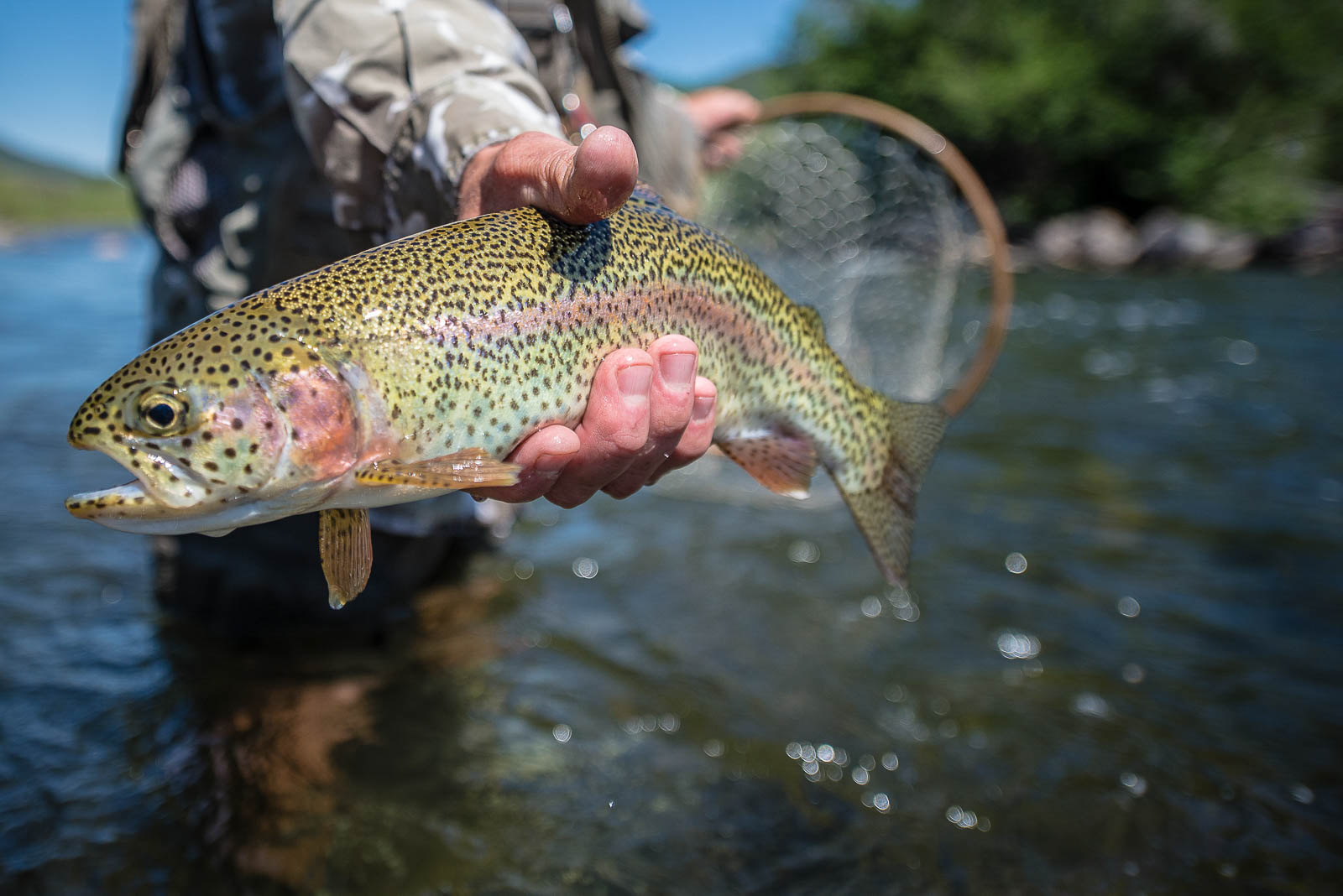
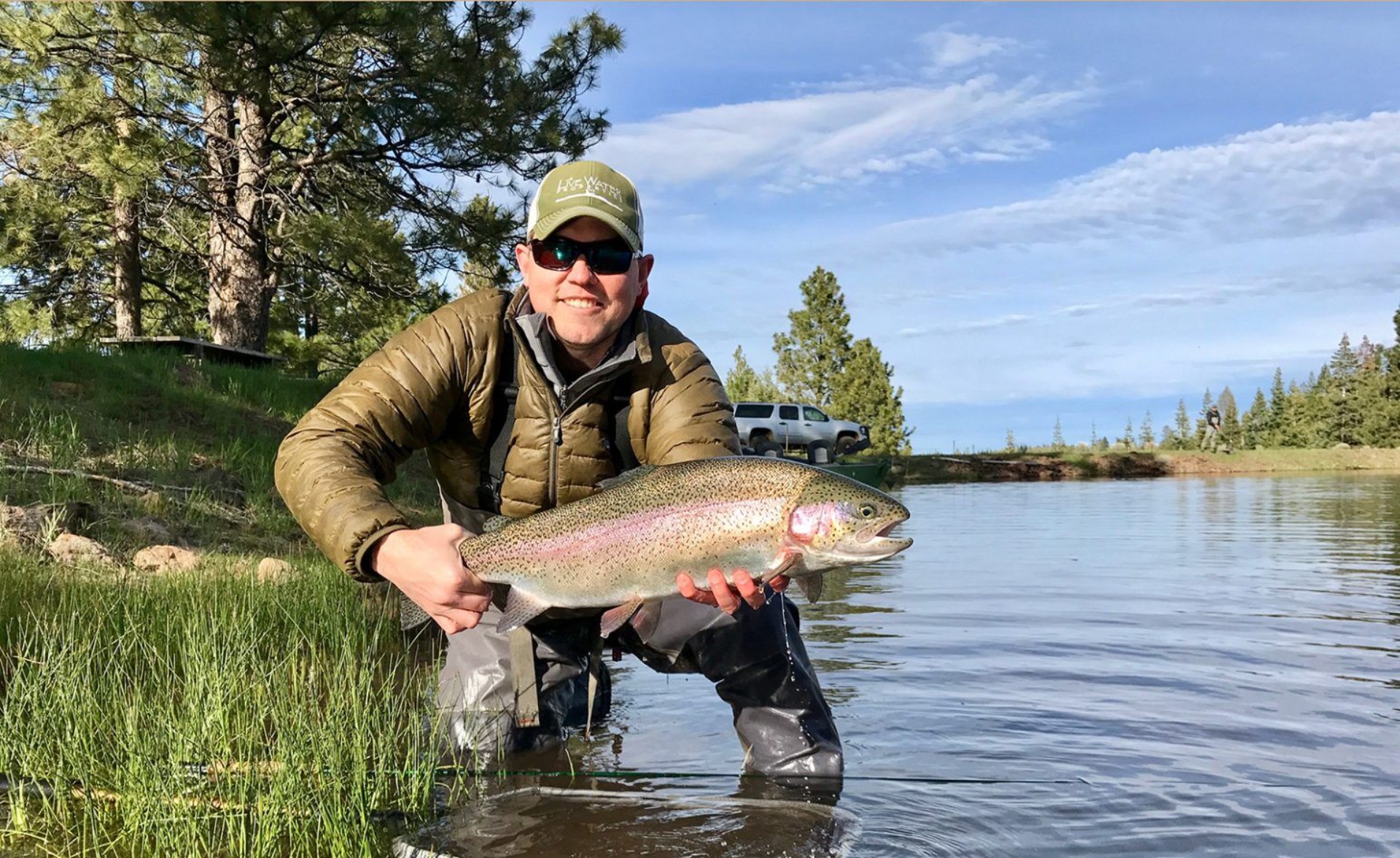
Following an exceptional snowpack during the previous winter and one of the rainiest springs in recent history, July arrives in the West with flourishing water flows and promising weather forecasts filled with sunshine. This abundant moisture has led to a significant increase in insect populations, resulting in larger fish and enhanced fishing opportunities. As we witness the transformation of the water from murky shades of brown to a pristine, crystal-clear state, our expert angling Brokers have diligently explored their respective ranches and nearby fisheries to provide accurate and firsthand accounts for our Annual Hatch Report. Continue reading for their comprehensive fly fishing reports, highlighting specific listings across the West.ย 

Table of Contents:

Fly Fishing Ranches for Sale in Wyoming

Heartwood in Crescent H Ranch

Jackson Hole, Wyoming | 48.89 Acres

Crescent H offers an exceptional fishing experience with its exclusive seven-mile stretch of blue ribbon spring creek. The ranch’s fishery is truly distinctive. Prior to being a private development of homesites, it was the first Orvis-endorsed guest ranch, and it was the knowledgeable guides at Crescent H who introduced the practice of catch-and-release fly-fishing in Jackson Hole. Currently, only homeowners have the privilege of accessing the ranch’s pristine waters, spanning seven miles of picturesque spring creeks. The ranch’s creeks are inhabited by native Snake River fine-spotted cutthroat trout, a species known for their voracious appetite and eagerness to rise to a dry fly floating on the water’s surface. These magnificent trout reach their peak season in mid-July, coinciding with the anticipated stonefly hatch. Throughout the fishing season, anglers can encounter numerous hatches, including various mayflies, midges, and caddisflies. Even if stoneflies are not present, the prospect of encountering a diverse range of insect hatches remains captivating. For those who prefer the thrill of casting larger flies, the latter part of summer presents an excellent opportunity. During this time, terrestrial insects such as grasshoppers and beetles often find themselves inadvertently landing on the river, enticing the trout.

Explore the Heartwood in Crescent H Ranch

Granite Ranch

Jackson Hole, Wyoming | 33.64 Acres

Fly fishing on Granite Ranch can be a wonderful experience for anglers. Granite Creek runs through the ranch, and it is surrounded by the Bridger-Teton National Forest, offering excellent fishing opportunities in an aesthetic natural setting. The fishing season on Granite Creek typically runs from late May or early June to the end of October. Granite Creek is known for its population of native cutthroat trout. You can also find brook trout in certain sections of the creek. These trout species provide exciting fly fishing opportunities. The insect hatches on Granite Creek can vary, so it’s essential to have a diverse selection of flies. Popular fly patterns to consider include dry flies like elk hair caddis, adams, royal wulff, and parachute hoppers. Nymph patterns such as prince nymphs, hare’s ear, and pheasant tail can also be effective. A typical 4- to 6-weight fly rod is suitable for fishing on Granite Creek. A floating line is usually sufficient, but you may also consider carrying a sinking line if you plan to fish deeper pools.

Explore Granite Ranch

Fly Fishing Ranches for Sale in Idaho

Grover Ranch

Driggs, Idaho | 880 Acres

Numerous spring creeks and seeps feed four unnamed streams on the Grover Ranch, all of which provide critical spawning habitat for cutthroat and brook trout. Although angling on the Teton River tributaries is closed during the month of June for the cutthroat spawn, angling for these trout later in the summer months with a 2- to 3-weight rod can be exciting and rewarding.

Nearby Grover Ranch, there is ample live water on the Teton River, where the water is still over the banks, and clarity is a challenge. Salmon flies have been seen on the lower Teton stretches closer to the confluence. As the water clears, these bugs should make their way upstream in the coming weeks. The riverโ€™s upper stretches in Teton Valley offer limited angling opportunities due to the continued runoff following a record-setting snowpack and consistent afternoon spring rains. As the end of June nears and cutthroat spawning diminishes, expect more fish from tributaries to move into the river system.

Explore the Grover Ranch

Mackay Bar Ranch

Riggins, Idaho | 21.18 Acres

Mackay Bay Ranch is nestled on the Salmon River, the longest undammed river in the Lower 48 states. Getting there is an adventureโ€”a twin-engine plane can land on the ranchโ€™s private riverside airstrip; and you can jet boat up the river, or, in winter, take a snowmobile. The Salmon River has outstanding steelhead and smallmouth bass fishing. The South Fork of the Salmon, which is upriver from the ranch, has Dolly Varden, rainbow trout, and cutthroat catch-and-release fly fishing. Stonefly nymphs are abundant in the Salmon River, and using imitations of these nymphs can be effective. Caddisflies are also prevalent in the river, so having a selection of caddisfly imitations in different sizes and colors can be beneficial. Patterns like elk hair caddis, x-caddis, or stimulator flies can be effective when the caddisflies are active. Having a range of mayfly imitations, such as parachute adams, blue-winged olive, or pale morning dun patterns, can be productive during hatches.

Explore Mackay Bar Ranch

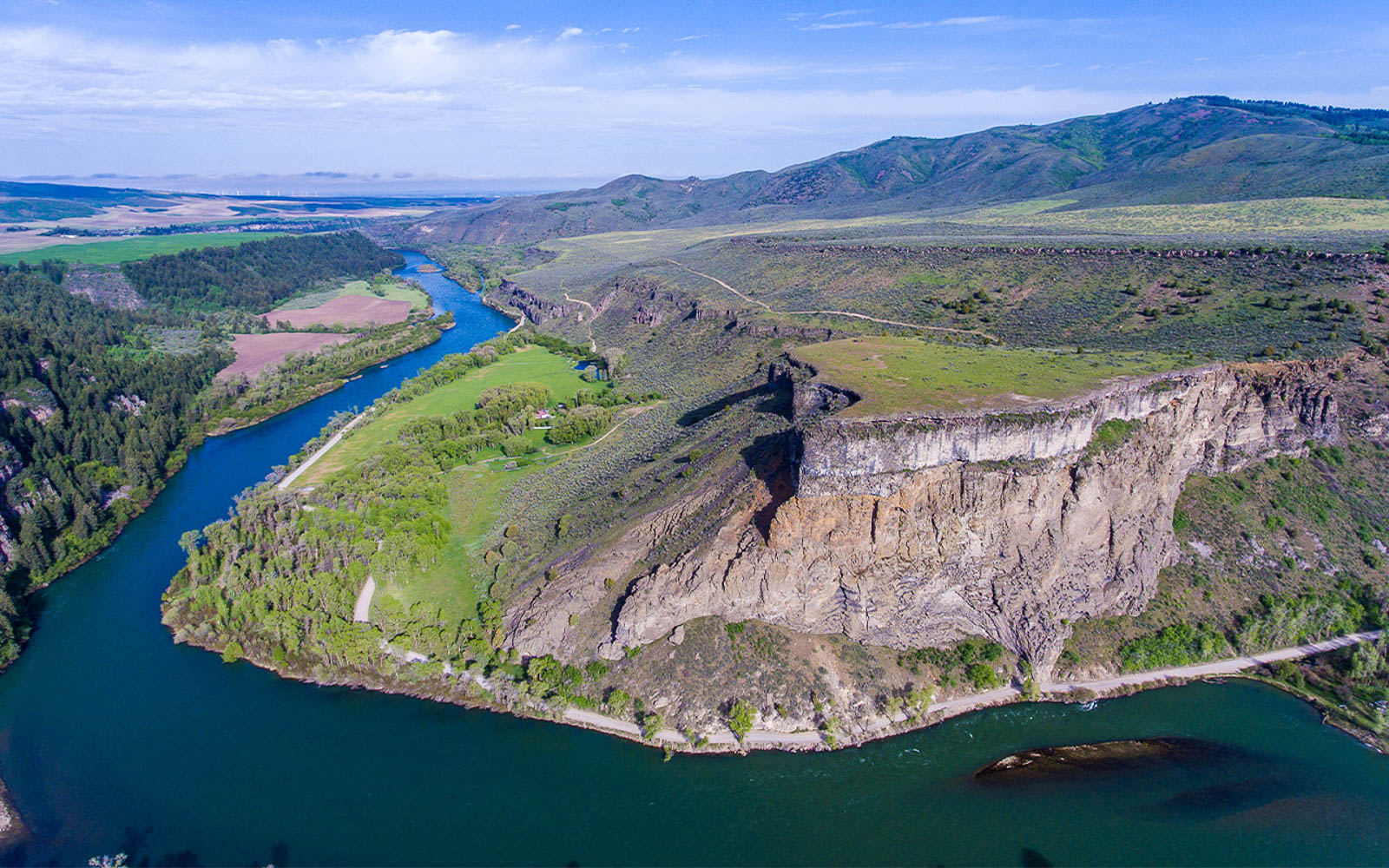
Henry’s Fork Overlook

Ashton, Idaho | 213 Acres

The Salmon fly hatch has tailed off in the past two weeks with residual action near the Hatchery Ford stretch. On the stretch from Warm River to Ashton, where the Henryโ€™s Fork Overlook is located, anglers are reporting excellent dry fly fishing with pale morning dunns PMDs, caddis, and the anglerโ€™s favorite, the green drakes. In general, Henryโ€™s Fork is one of the first rivers in our region to clear from spring runoff and is a favorite destination for many anglers. The middle of June marked the opening of the Harriman State Park in the Island Park area, which can prove challenging but also rewarding, with the larger fish in the system residing in this area.

Explore the Henry’s Fork Overlook

Fly Fishing Ranches for Sale in Colorado

Penn Ranch

Durango, Colorado | 343 Acres

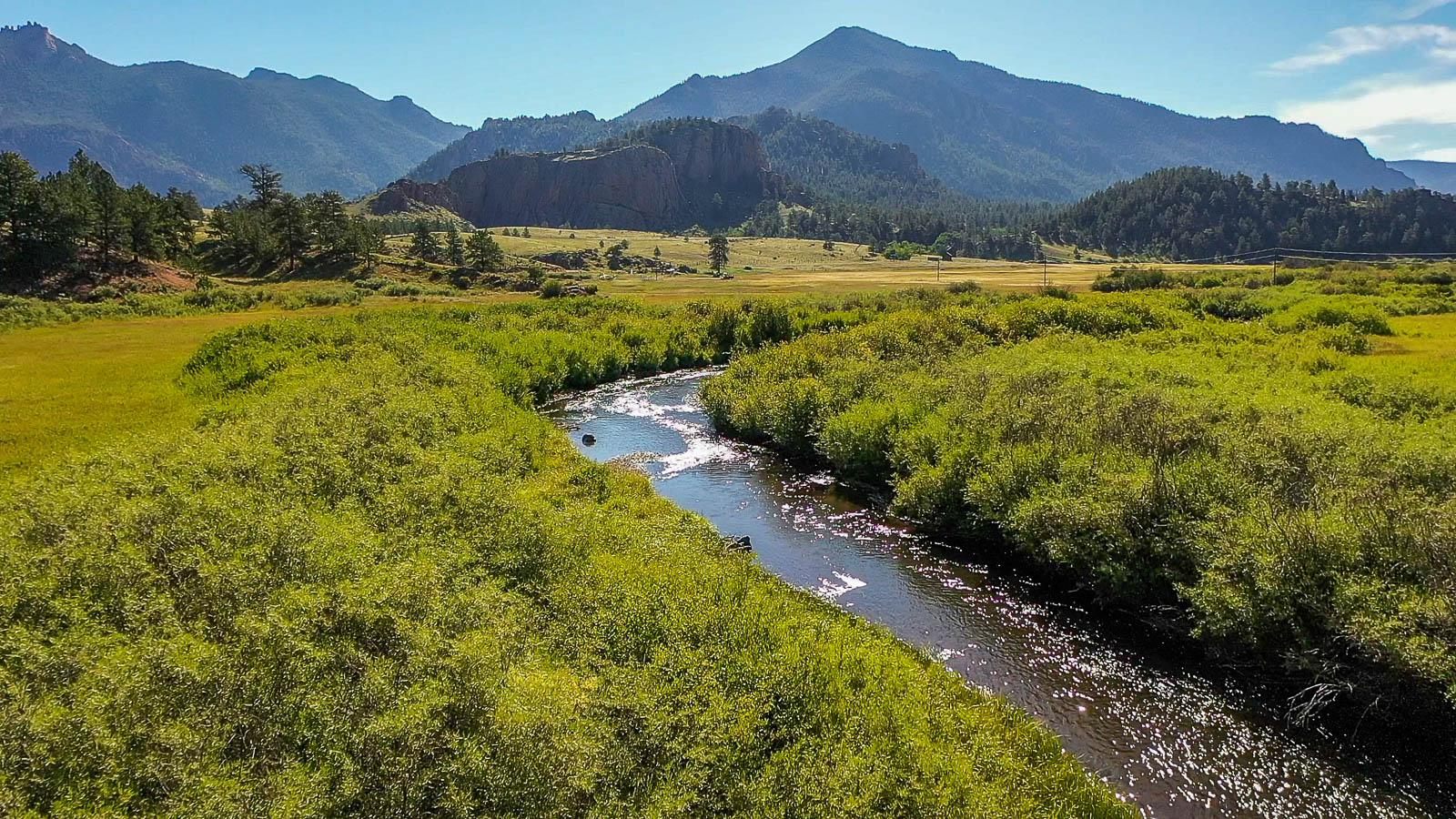
The Upper Los Pinos or Upper Pine – as the locals know it – is a classic Western freestone stream draining the pristine Weminuche Wilderness. The rainbows, browns, cutthroats, and brook trout are perfectly matched to the stream’s multi-colored pebbles and stones, which often conceal their abundance. The bugs on the Pine typically hatch in line with other Western freestone fisheries (freestone fisheries are fed by rainfall and snowmelt) though they are a little behind schedule due to this year’s larger runoff and wet spring. Currently, the water level is dropping fast. The clearing water has the bugs moving, and the fish are active, especially towards sunset. The Pine is rapidly approaching the prime summer season, which carries through fall with excellent dry fly fishing. With all the ordinary hatches being plentiful, fly selection is not crucial. Wulffs, Stimulators, and Hoppers provide reliable floatability in the swift, sometimes frothy currents. Wary larger fish, which are commonly over 16″, can often be enticed with a Zug Bug, Hares Ear, Prince, and Pheasant Tail dropper fly. Larger nymphs, 12s, and even 10s, offering flash, get more attention in the swift waters, which have yet to reach their gin-like clarity that is expected a little later in the season.
Explore the Penn Ranch

Dancing Pine Ranch

Bayfield, Colorado | 182 Acres

The Lower Pine River, located south of the Vallecito Reservoir, is essentially a private tailwater fishery. The extra oxygen helps the rainbows and browns below Vallecito Dam grow to trophy-worthy proportions. With releases at just under 600 CFS, the flows are high but healthy. The fish are all over the river, usually positioned behind or even in front of the sizable boulders that dot the river channel. Classic pocket water technique is reliable on the Lower Pine. With significant hatches of caddis, mayflies, and stoneflies, anglers can match the hatch by picking blindly from their fly box. However, from June into July, it pays to go very large. Big attractor patterns – such as Elk Hair Caddis, Royal Wulff, Renegade, Godzzila, and DiveBomber – coupled with a large Hare’s Ear nymph or even a San Juan Worm is the secret sauce during the steady early season flows. With a stellar 2022-23 snowpack, the great flows should extend into the fall, keeping fish – and anglers – happy.

Explore the Dancing Pine Ranch

J Diamond B Ranch

Lake George, Colorado | 448 Acres

Tarryall Creek on the J Diamond B Ranch features a meandering flow with an ideal combination of riffles, deep pools, undercut banks, and some great pocket water. Top-to-bottom stream enhancement on the entirety of the 1+ mile of private fishery has resulted in outstanding habitat, with impressive populations of Browns and Rainbows averaging 15 to 17 inches, with catches upwards of 24โ€ not being uncommon. Additionally, there is a smaller population of feisty brook trout. The hatches vary throughout the year, with midges being important year-round, while mayflies, caddis, and stoneflies become prevalent during the warmer months. Currently (mid-June), pale morning dun (PMD) hatches are dominating the mornings. The lush grasses that have followed a healthy snowpack promise a stellar terrestrial season. Currently, stealthy anglers who can drop beetles or ants into the undercut bends are catching large trout. Later in the Summer, hoppers will replace the beetles and ants as the favored option.

Explore the J Diamond B Ranch

Fly Fishing Ranches for Sale in Montana

Healing Waters Lodge

Twin Bridges, Montana | 20 Acres

Healing Waters is an ORVIS-endorsed fly-fishing lodge with a diverse fishing program rivaled by few operations. The lodge benefits from special use permits on Montanaโ€™s famed rivers, including the Beaverhead, Big Hole, Jefferson, Madison, and the Smith. The lodge also benefits from wading access agreements on streams like the Alder, the Ruby, and the Boulder. Additional access to private spring-fed creeks and ponds continues to set Healing Waters Lodge apart from the competition. With flows backing off and clarity increasing, local freestone fisheries are already dropping and approaching good fishing levels. Salmon flies have been hatching on various rivers around Southwest Montana and will continue through early July. Golden stones are expected to follow the salmon fly hatch, and just around the corner, yellow sallies, caddis, and pale morning duns should also appear on the menu. Streamer fishing will improve as water temps continue to rise.
Explore Healing Waters Lodge

Marias River Ranch

Loma, Montana | 1,498 Acres

The Marias River Ranch offers outstanding angling opportunities for warm water fish like smallmouth bass, walleye, sugar, catfish, pike sturgeon, and the occasional trout.ย Bring your 6 to 8-weight rod and plenty of streamer and popper patterns for the Small Mouth, and donโ€™t be shy about including a spinning rod too. Other anglers and boaters are seldom seen on this part of the river, making it feel a little like stepping back in time. Closer to Tiber Dam, the Marias is a tailwater fishery offering good traditional trout angling opportunities. The Mighty Missouri is about five river miles downstream from the ranch. Trout are not common in this portion of the river. However, most warm water species that live in Montana can be found there; trophy-sized fish are not uncommon.
Explore Marias River Ranch

Bridger Creek Gem

Bozeman, Montana | 71 Acres

Bridger Creek is a little bit of a โ€œsleeperโ€ since it does not have excellent access for the public in most areas.ย You will be pleasantly surprised by the great fishing that the creek offers.ย Bring a 6 to 7&1/2 foot 3 to 5 wt. And a small selection of attractor dries and a size 14 bead head or two if the trout are not looking up.ย Rainbows are the primary target, but anglers will catch a few browns and even a brook trout or two.ย The average size is about 10 inches, yet significantly larger trout are in deeper pools.ย If youโ€™re looking for 20+ inchers, Bridger Creek is probably not the place.ย But if catching beautiful fish on attractors, ants, and hoppers sounds like a great way to spend a few hours, this creek should not be overlooked.ย These fish are abundant and eager, two of our favorite qualities in a trout.

Explore the Bridger Creek Gem

Fly Fishing Ranches for Sale in Oregon

R&C Ranch

Fossil, Oregon | 5,430 Acres

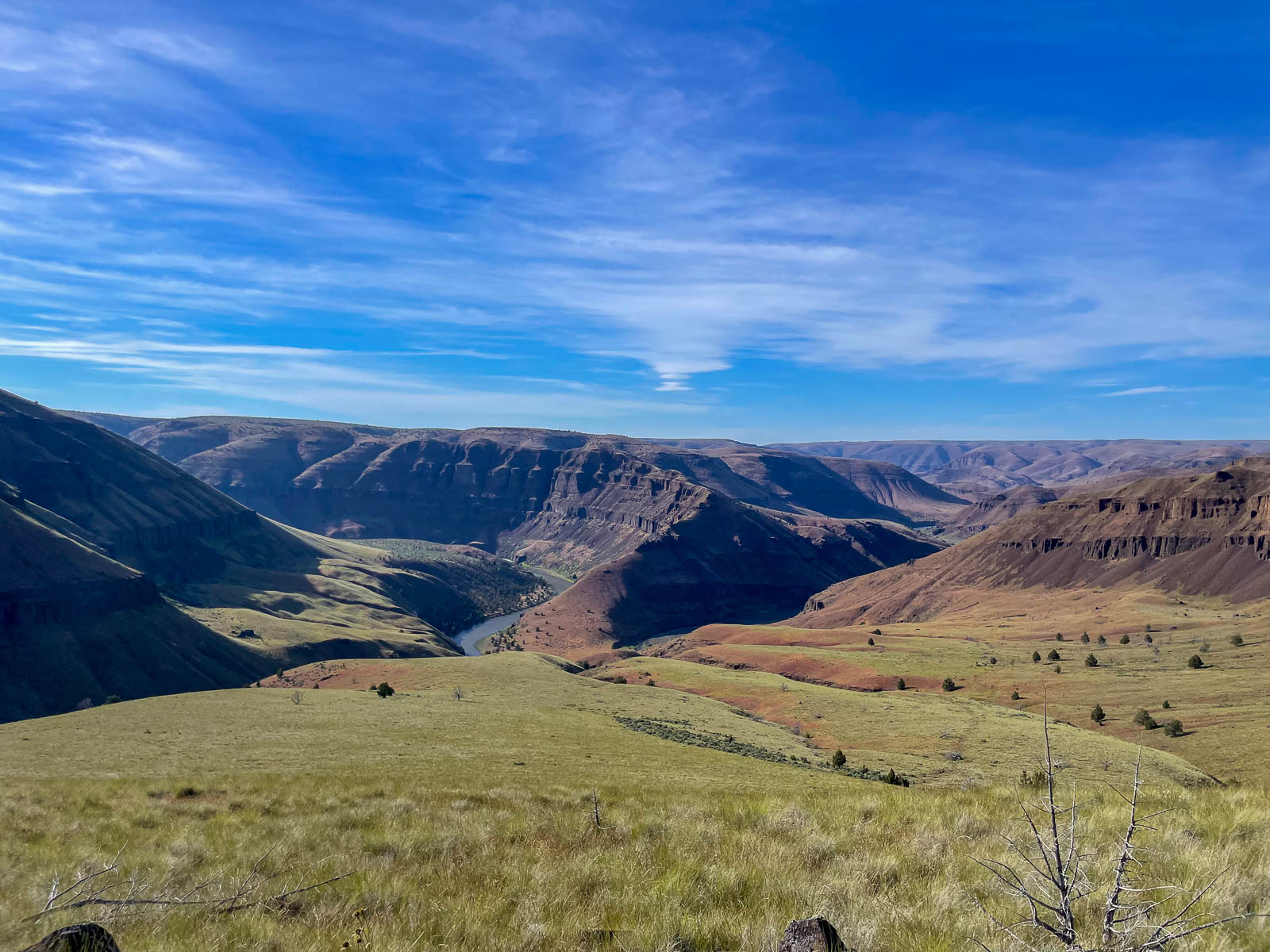
Fishing for smallmouth bass on the John Day can be epic from around May through August. The action is fast and furious on most days with both sub-surface and poppers on the top water. You can float the river searching the banks and deep holes for big bass or fish right from the front yard or the many riverfront miles of the R&C Ranch. Many fish can be caught during this spring/summer fishery, and an 80-fish day is not out of the question. Come fall, the Steelhead fishing picks up, and big fish start to move up the river.

Explore the R&C Ranch

Fly Fishing Ranches for Sale in Washington

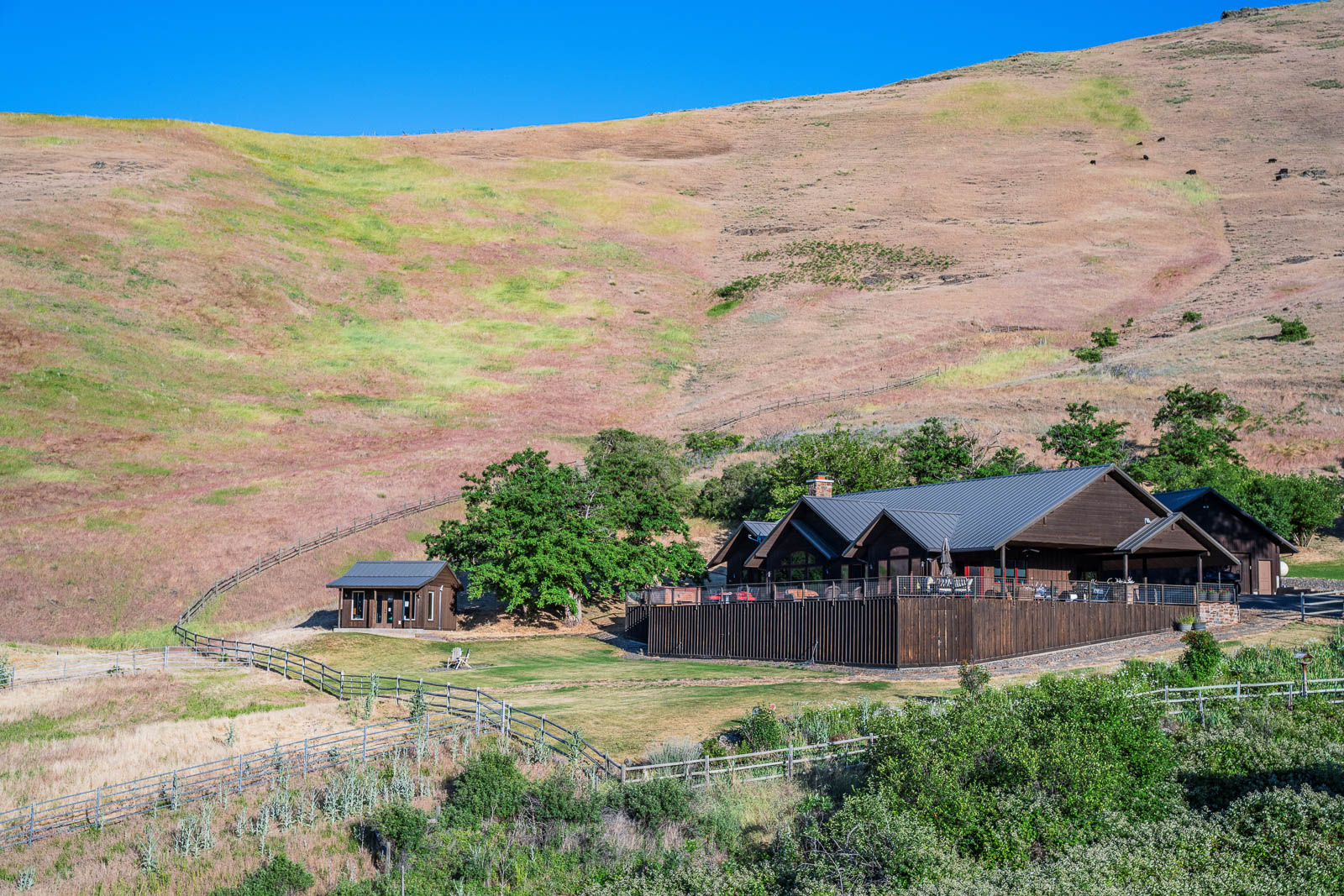
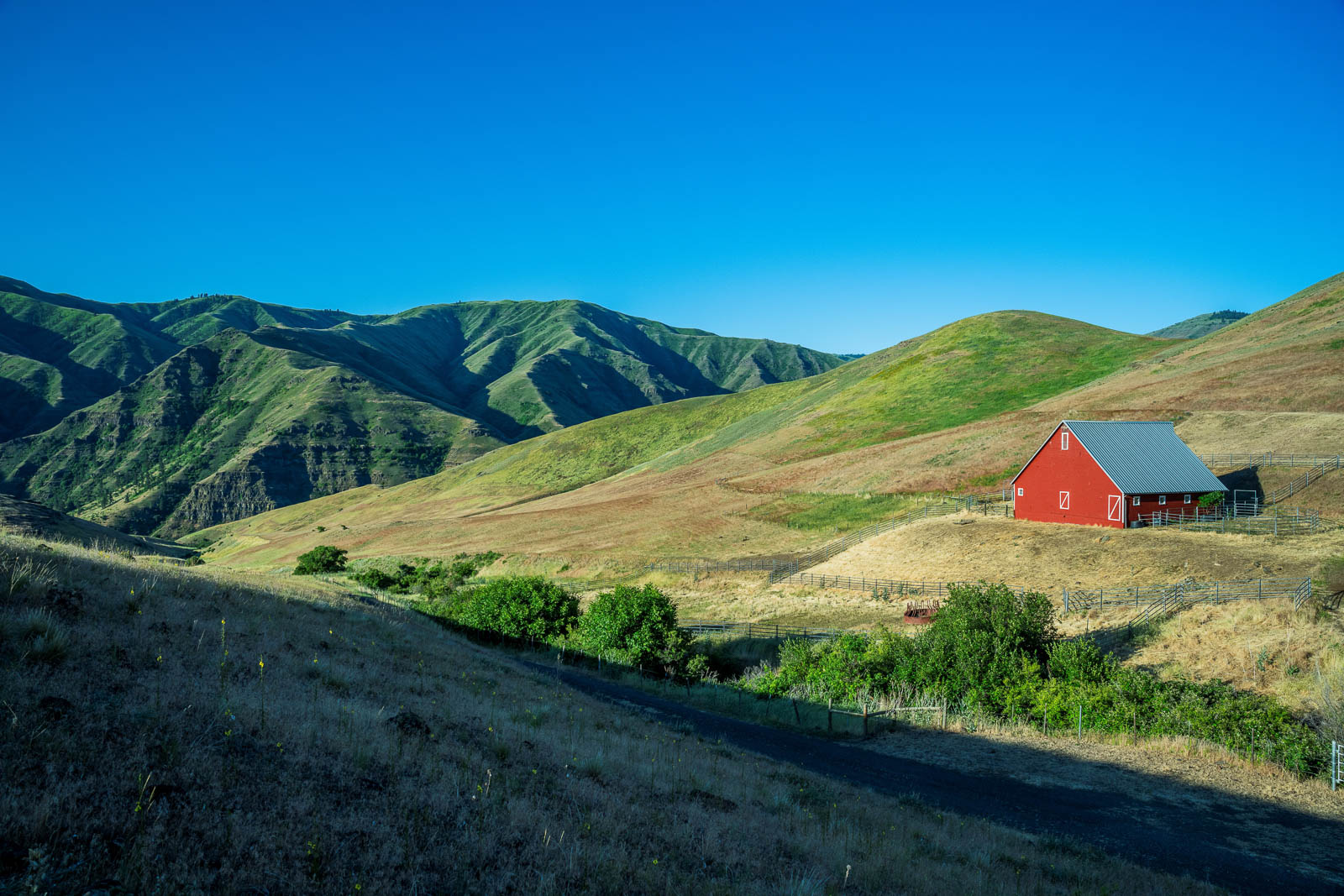
Sunrise Ranch

Anatone, Washington | 2,685 Acres

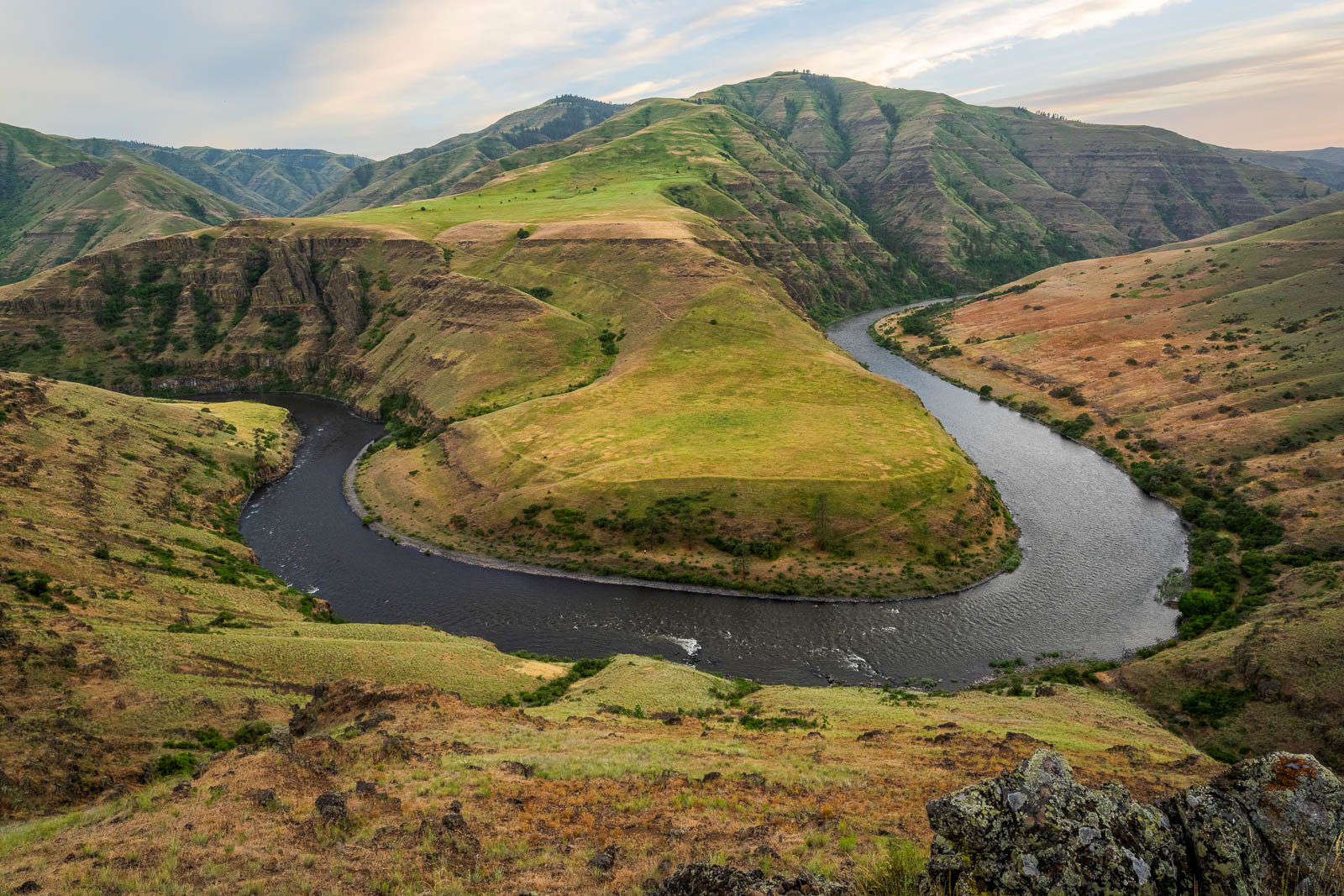
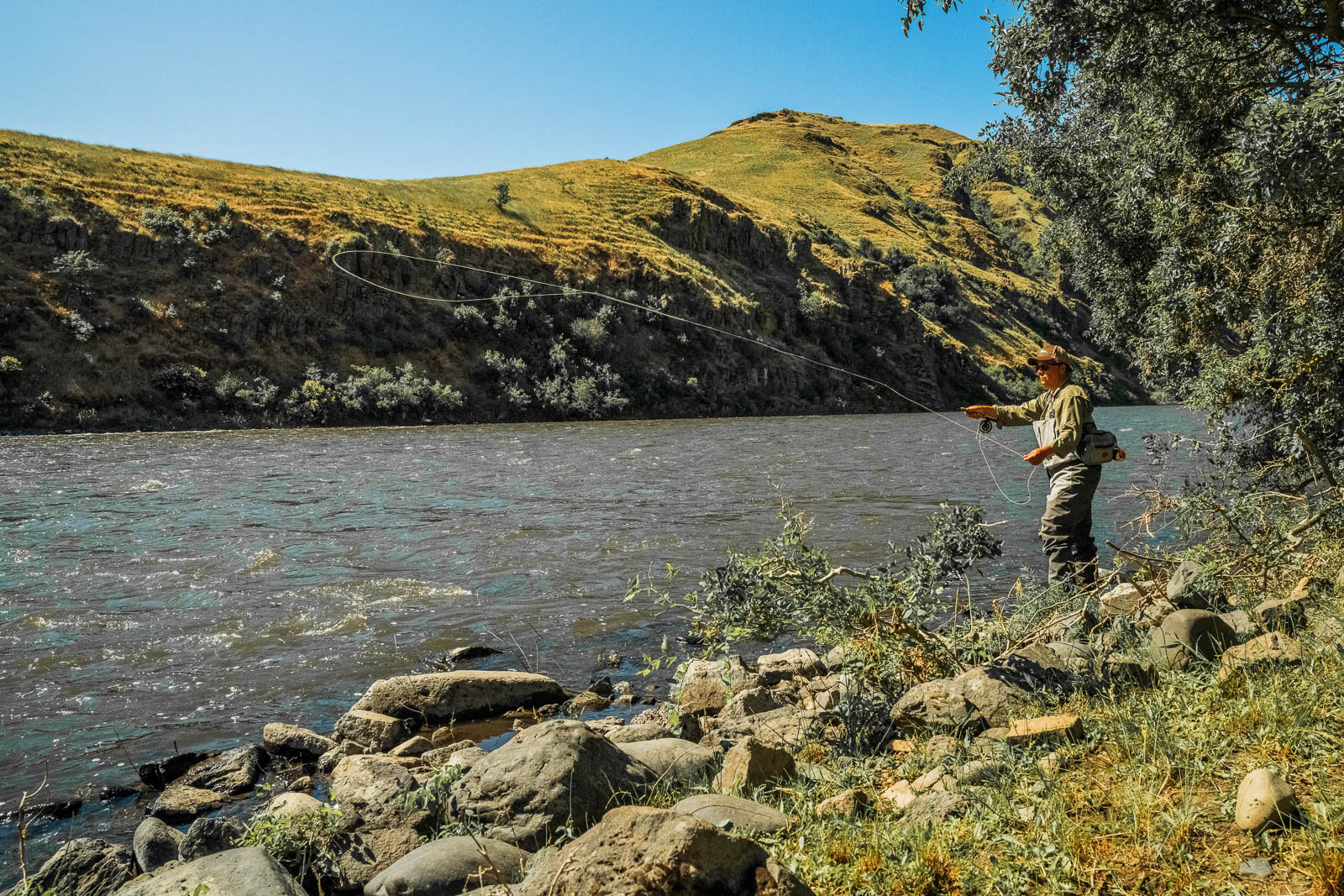
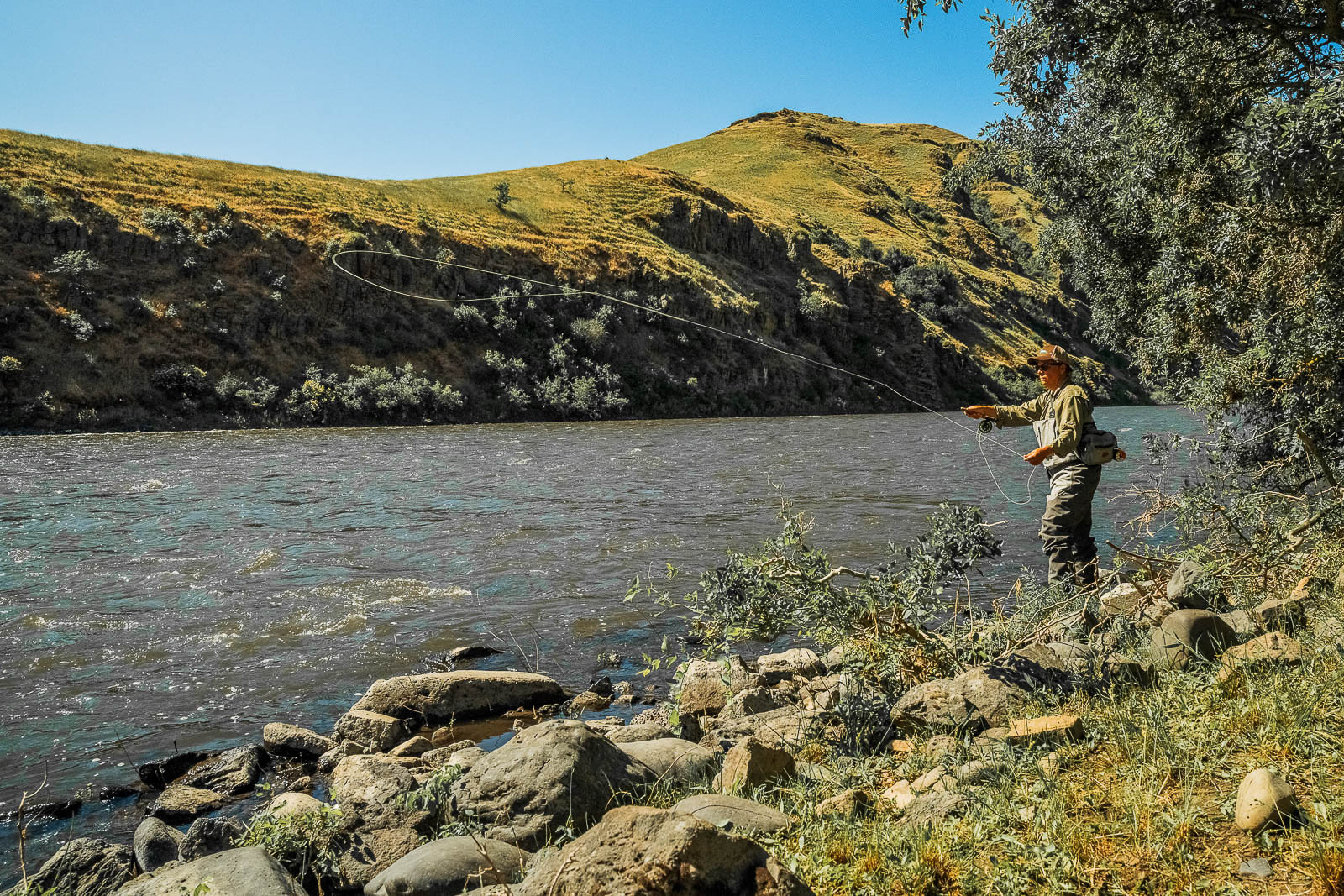
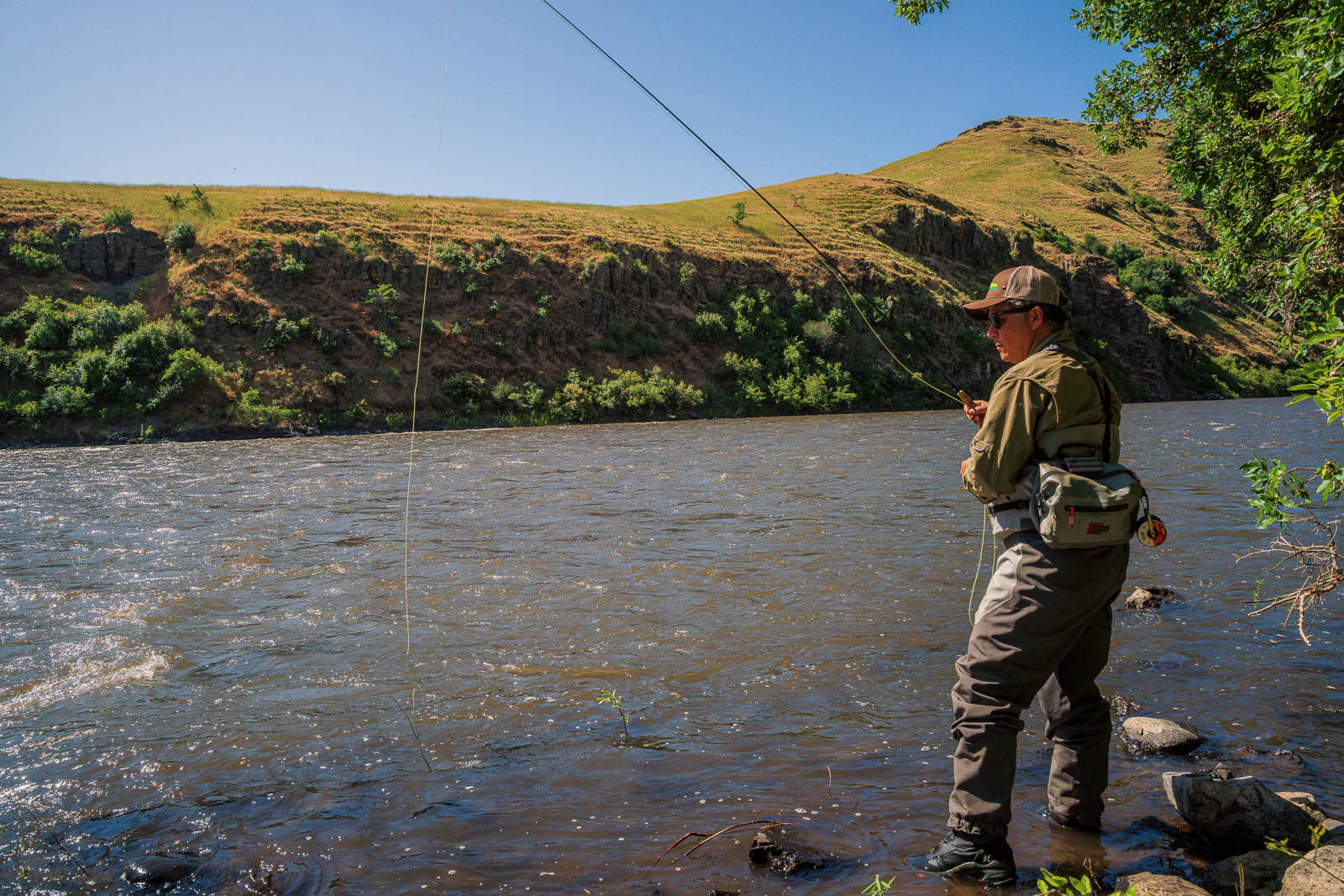
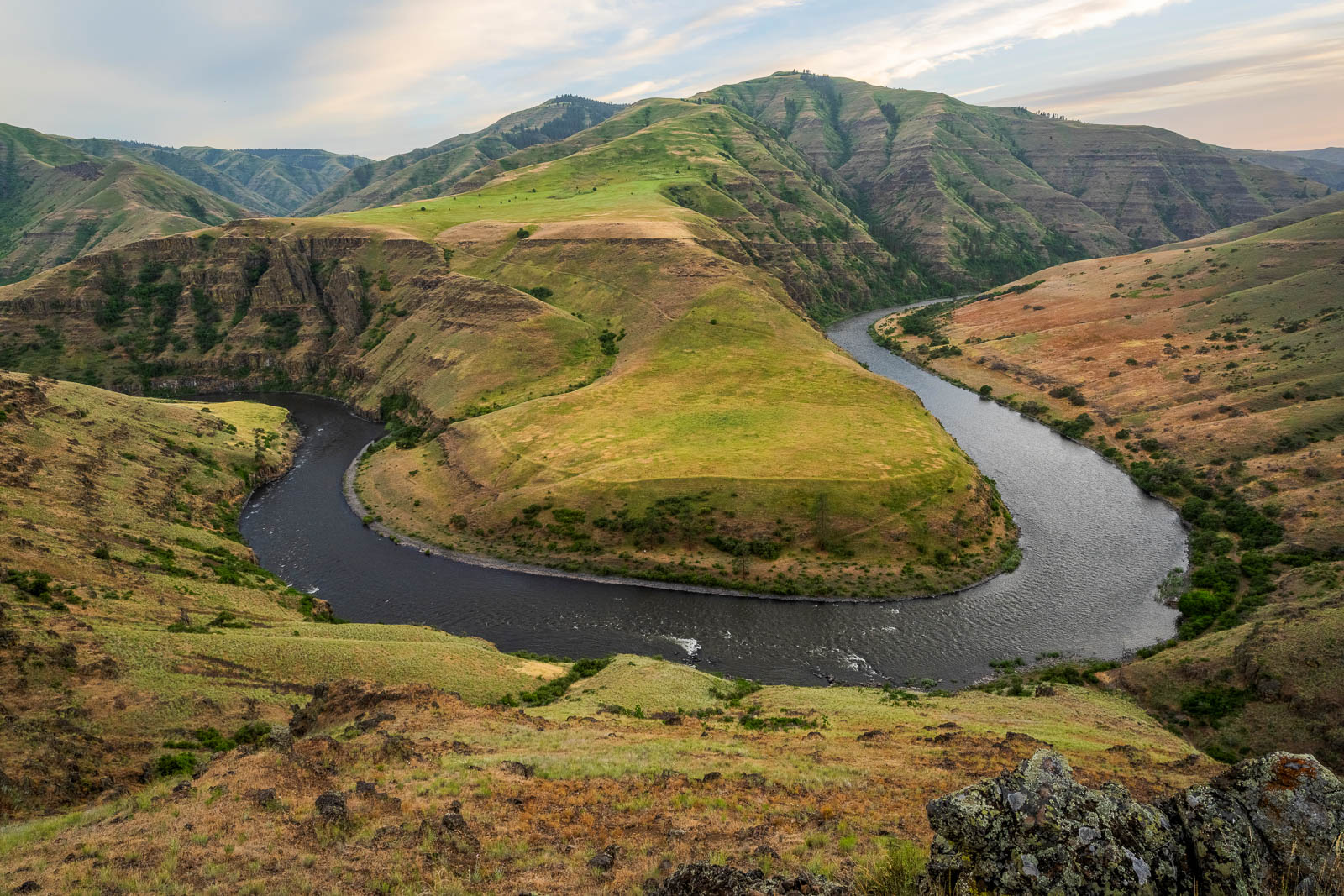
Fishing on the Grande Ronde from June through September is excellent for rainbow trout and smallmouth bass. For trout, the hatches in June tend to fall into the stonefly and caddis categories. From July through September, hoppers are a great choice to stir up big fish. Fishing smolt streamers or minnow patterns with some flash or sparkle can be very productive for the bass during the summer months, but poppers can always be a great option and work great for top-water action. As the summer winds down and we move into fall, steelhead starts to populate the river around mid-September.

Explore the Sunrise Ranch

"(Required)" indicates required fields

This field is for validation purposes and should be left unchanged.
Name(Required)
Skip to content